Megatrend Investing
The fund follows a megatrend investing strategy by focusing on potential long-term growth drivers within the healthcare sector.
Read MoreBAJAJ ASSET MANAGEMENT LIMITED.

The objective of the scheme is to generate long term capital appreciation by predominantly investing in equity and equity related securities of pharma, healthcare and allied companies. However, there is no assurance that the investment objective of the scheme will be achieved.
The Bajaj Finserv Healthcare Fund is a thematic equity fund investing in companies linked to the healthcare scheme. It follows a Megatrend Investing strategy, focusing on long-term structural shifts in India’s healthcare segment.
Investment strategy
Megatrend Investing
The fund follows a megatrend investing strategy by focusing on potential long-term growth drivers within the healthcare sector.
Read MoreDiversification opportunity
For investors looking to diversify their equity portfolios, the Bajaj Finserv Healthcare Fund offers an opportunity to gain exposure to the healthcare sector.
Read MoreTargeting future profit pool companies
The fund targets companies in healthcare, pharmaceuticals, biotechnology, medical devices, and wellness that are positioned to benefit from sector growth.
Read More
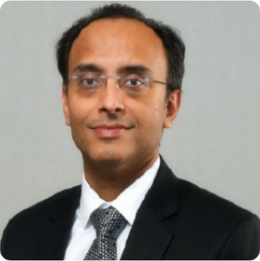
Siddharth Chaudhary joined the Company in July 2022 as a Senior Fund Manager – Fixed Income. Prior to this, he was associated with Sundaram Asset Management Co. Ltd from April 2019 - July 2022 as Head Fixed Income – Institutional Business. From April 2017 – March 2019, he served as a Head – Fixed Income, and from August 2010 – March 2017 as a Fund Manager – Fixed Income with Sundaram Asset Management Co. Ltd. During June 2006 – September 2010, he was working as Senior Manager, Treasury Dept in Indian Bank.
Mr. Vinay Bafna has been associated with the AMC as Research Analyst. Prior to joining the AMC, he was associated with ICICI Securities Limited as Research Analyst, tracking metals & commodities, pharma. He has over 10 years of work experience in researching different commodities market and sectors such as metals & commodities, pharma, IT, hospitality and supporting ERP used by global commodity clients.
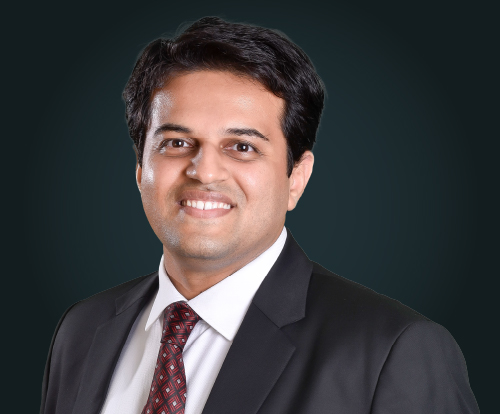
Mr. Bharat Hegde joined the Company in July 2024 as a Senior Research Analyst - Megatrends and has been actively engaged in tracking and identifying domestic and global megatrends. In addition, he is engaged in ideation, and in-depth company and sector research for equity funds on multiple sectors such as IT, Defence, Power, Capital goods and electric Utilities.
Upon his appointment as Fund Manager and Key Personnel, he will assume responsibility for the management of allocated funds, while continuing his focus on sectoral and company-level research.
Prior to joining the Company, he was associated with Bharti AXA Life Insurance Company Limited, Motilal Oswal Financial Services Limited, SBICAP Securities Limited, and CRISIL Global Research & Analytics.
He brings over 14 years of experience, with over 10 years of experience in equity research, including stock recommendations for equity funds, conducting company and sector analysis, assisting in fundamental research on coverage companies, building and maintaining financial models, and preparing detailed research reports.
Bajaj Finserv Healthcare Fund asset allocation pattern is as follows:
| Instruments | Indicative allocations (% of total assets) | |
|---|---|---|
| Minimum | Maximum | |
| Equity and Equity Related Securities of pharma, healthcare and allied companies | 80% | 100% |
| Equities and Equity related securities of other than pharma, healthcare and allied companies | 0% | 20% |
| Debt and Money Market Instruments* and Units of Mutual Fund schemes | 0% | 20% |
| Units issued by REITs and InvITs | 0% | 10% |
*Debt instruments shall be deemed to include securitized debts (excluding foreign securitized debt). Money market instruments will include commercial papers, commercial bills, Triparty REPO, Reverse Repo and equivalent and any other like instruments as specified by SEBI and Reserve Bank of India from time to time.
An open ended equity scheme following pharma, healthcare and allied theme
| Tenors | Current value of ₹10,000 Invested | CAGR | ||||
|---|---|---|---|---|---|---|
| Since Inception 27 Dec '24 |
1Y | 3Y | Since Inception 27 Dec '24 |
1Y | 3Y | |
| Bajaj Finserv Healthcare Fund | ₹12,042 | ₹12,501 | — | — | — | — |
| BSE Healthcare TRI | ₹11,670 | ₹11,881 | — | — | — | — |
| Nifty 50 TRI | ₹10,331 | ₹9,965 | — | — | — | — |
Disclaimer: Past performance may or may not be sustained in future.
Different Plans i.e. Regular Plan and Direct Plan under the scheme have different expense structure. Performance is provided for Regular Plan – Growth Option. Inception Date: 27th December 2024 Period for which scheme’s performance has been provided is computed basis last day of the previous month preceding the date of this material.
Returns less than 1 year period are simple annualized and greater than 1 year are compounded annualized.
Nil
For each purchase of units through Lumpsum / switch-in / Systematic Investment Plan (SIP) and Systematic Transfer Plan (STP), exit load will be as follows:
IDCW option will offer the following sub-options:
The Scheme will have a common portfolio across various Plans/Options/Sub-options.
Investors are requested to note that Growth and IDCW Option (Payout, Reinvestment and Transfer) under Regular and Direct Plans will have different NAVs. These NAVs will be separately declared.
to view Total Expense Ratio
This product is suitable for investors who are seeking*:
Bajaj Finserv Healthcare Fund is an open-ended thematic equity mutual fund. It invests mainly in shares and related securities of pharma, healthcare and allied companies.
The fund’s scope is wider than pharmaceutical manufacturing. It can invest in hospitals, diagnostics, biotechnology, medical equipment, medical manufacturing, healthcare services, research, analytics, nutraceuticals and digital health services.
The fund follows a megatrend-focused strategy. This means it looks for companies that may benefit from long-term structural shifts and emerging opportunities in healthcare.
Healthcare is sometimes described as a defensive sector because people may continue to need medicines and medical services during different economic conditions. However, healthcare stocks and the fund’s NAV can still rise or fall.
As a thematic Healthcare Fund, the scheme provides focused exposure to healthcare-related businesses. This can help diversify a broader equity portfolio, but it does not provide the same spread across sectors as a flexi cap, multi cap or another diversified equity fund.
The scheme seeks long-term capital appreciation, but its growth potential is not assured. It is classified as Very High risk.
Pharma and healthcare mutual funds offer a way to invest across different parts of the healthcare industry through one fund:
These features do not remove market or concentration risk. The scheme invests mainly in one theme and carries a Very High risk classification.
A pharma mutual fund or healthcare fund is more concentrated than a diversified equity fund. Before investing, consider:
The scheme can invest across the following areas:
| Investment type | Permitted allocation |
| Equity and equity-related securities of pharma, healthcare and allied companies | 80% to 100% |
| Equity and equity-related securities of other companies | 0% to 20% |
| Debt and money-market instruments and units of mutual fund schemes | 0% to 20% |
| Units issued by REITs and InvITs | 0% to 10% |
At least 80% of the scheme is invested in pharma, healthcare and allied companies. This makes healthcare the main driver of the fund’s performance.
The fund can invest across large cap, mid cap and small cap companies. The actual allocation can change as the fund manager identifies opportunities while staying within the scheme’s investment rules.
Bajaj Finserv Healthcare Fund offers Direct and Regular Plans. Both plans hold the same portfolio and follow the same investment objective. The difference is how you invest and the expenses charged:
| Aspect | Direct Plan | Regular Plan |
| How you invest | Directly with Bajaj AMC | Through a mutual fund distributor |
| Distributor assistance | Not included | Available through the distributor |
| Distributor commission | Not included in scheme expenses | Included in scheme expenses |
| Expense ratio | Lower than the Regular Plan | Higher than the Direct Plan |
| NAV | Different because of the lower expenses | Different because of the higher expenses |
A lower expense ratio means a smaller amount is deducted from the scheme for operating and distribution costs. This can result in a difference between the NAV and returns of the two plans over time. It does not mean that the Direct Plan holds different investments. Both plans offer the following options:

The available choices include Bajaj Finserv Healthcare Fund Direct Growth, Direct IDCW, Regular Growth and Regular IDCW. The IDCW option includes Payout, Reinvestment and Transfer sub-options under the scheme documents. Growth is the default option.

Bajaj Finserv Healthcare Fund accepts one-time and regular investments:
To invest directly online, log in or create an account on the Bajaj AMC investor portal. Complete the required KYC and payment steps, then select the Direct Plan and preferred option.
You can also invest offline at an official point of acceptance or through a registered mutual fund distributor. Investments made through a distributor can be placed in the Regular Plan.
Bajaj Finserv Healthcare Fund does not have a mandatory lock-in period. However, an exit load may apply if units are redeemed soon after they are purchased:
For an SIP, the three-month period is calculated separately for every instalment because each instalment purchases new units on a different date.
Certain switches may be exempt from exit load under the scheme documents. The scheme ordinarily sends redemption proceeds within three working days after receiving a valid request, subject to the applicable rules.
The load structure can change for future investments. Check the latest scheme information before redeeming.
Bajaj Finserv Healthcare Fund is taxed as an equity-oriented mutual fund:
Applicable surcharge and health and education cess are charged separately.
Every SIP instalment is treated as a separate purchase. For example, the holding period of a January instalment begins in January, while the holding period of a February instalment begins in February.
IDCW is added to the investor’s taxable income and taxed at the applicable rate. TDS may also apply under the prevailing tax rules.
The tax information in this article is based on prevailing laws at the time of publishing the article and is subject to change. Please consult a tax professional or refer to the latest regulations for up-to-date information.
| ELSS Tax Saver Fund | Flexi Cap Fund | Multi Cap Fund |
|---|---|---|
| Large and Mid Cap Fund | Small Cap Fund | Large Cap Fund |
| Consumption Fund | Banking and Financial Services Fund |
| Equity Funds | Debt Funds | Hybrid Funds | Index Funds |
|---|---|---|---|
| Exchange Traded Fund Funds | Savings+ | Mutual Funds |
Bajaj Finserv Healthcare Fund is an open-ended thematic equity scheme. It invests 80% to 100% of its assets in pharma, healthcare and allied companies. Its benchmark is the BSE Healthcare Total Return Index.
The fund invests in pharmaceutical companies but is not limited to pharma. It can also invest in hospitals, diagnostics, biotechnology, medical equipment, healthcare services, research, analytics, technology and other businesses covered by the healthcare theme.
A pharma fund primarily focuses on businesses involved in medicines and pharmaceutical products. Bajaj Finserv Healthcare Fund has a broader mandate covering pharma, hospitals, biotechnology, medical equipment, healthcare services and allied businesses.
The fund provides access to a professionally managed portfolio of pharma, healthcare and allied companies. It invests across market-cap segments and follows a megatrend investing approach. However, it remains a focused thematic scheme classified as Very High risk.
Yes. The minimum fresh lumpsum investment is ₹500. An SIP can also start at ₹500 with at least six instalments. Additional purchases start from ₹100.
The NAV of the Direct Plan-Growth option was ₹12.32 as on 28 August 2026. The NAV differs across Direct, Regular, Growth and IDCW options and is calculated at the end of each business day.
The scheme’s assets under management were ₹372.54 crore as on 31 July 2026. AUM is the total value of money managed by the scheme and can change with market movements, new investments and redemptions.
As on 31 July 2026, the scheme held 96.58% in equity and 3.42% in debt and cash. Its equity allocation included 30.52% in large cap, 25% in mid cap and 41.06% in small cap companies.
The scheme mandate permits 80% to 100% in pharma, healthcare and allied companies. It also permits up to 20% in other equities, up to 20% in debt and money-market instruments and mutual fund units, and up to 10% in REITs and InvITs.
As on 31 July 2026, the leading holdings displayed on the official scheme page included Divi’s Laboratories at 9.67%, Sun Pharmaceutical Industries at 8.87%, Piramal Pharma at 6.60%, Apollo Hospitals Enterprise at 6.50%, Aurobindo Pharma at 6.13% and Rubicon Research at 6.01%.
Please note that the reference to any industry/sector/stock is provided for illustrative purposes only. This should not be construed as a research report or a recommendation to buy or sell any security or sector.
Both plans hold the same portfolio and follow the same investment objective. The Direct Plan does not include distributor commission and therefore has a lower expense ratio. The Regular Plan is purchased through a distributor and includes distribution expenses. Their NAVs and returns differ because their expenses are different.
No. The scheme does not have a mandatory lock-in period. Under the load structure, a 1% exit load applies if units are redeemed or switched out within three months of allotment. No exit load applies after three months. For an SIP, the three-month period is calculated separately for every instalment.
The scheme ordinarily sends redemption proceeds within three working days after receiving a valid redemption request at an authorised centre, subject to the applicable rules.
The scheme is classified as Very High risk on the Riskometer. It is exposed to equity-market movements and concentration risk because at least 80% of its assets are invested in pharma, healthcare and allied companies.
The scheme invests mainly in one theme and therefore offers less sector diversification than a broad diversified equity fund. Investors should compare its 80% to 100% healthcare allocation with their other investments before deciding its place in the portfolio.
No specific income-tax deduction is available merely for investing in this scheme. It is taxed as an equity-oriented mutual fund.
Under the rules prevailing on 31 August 2026, gains from units held for up to 12 months are generally taxed at 20%. For units held for more than 12 months, aggregate eligible long-term equity gains above ₹1.25 lakh in a financial year are generally taxed at 12.5%. Applicable surcharge and cess are additional.
The tax information in this article is based on prevailing laws at the time of publishing the article and is subject to change. Please consult a tax professional or refer to the latest regulations for up-to-date information.
The scheme offers IDCW with Payout, Reinvestment and Transfer sub-options. IDCW can be declared only when distributable surplus is available. The amount and timing are not fixed or assured, and the NAV generally falls by the amount distributed and applicable statutory levy. IDCW is added to the investor’s taxable income and taxed at the applicable rate. TDS may also apply under prevailing rules.
Yes. NRIs and Persons of Indian Origin are eligible to apply, subject to applicable regulations, KYC requirements, documentation and any restrictions stated in the scheme documents.
Call, chat or write to us if you
need investment help
Toll-free number
Write to us at
Investor WhatsApp channel
Share your details and our experts will guide you.
By submitting my details, I agree to receive a call from
Bajaj AMC for assistance.
Need help planning your investments?
Our Investment Philosophy reflects what we, as an organisation, believe will generate a good return on equity investment for our investors in the long term. It dictates our goals and guides decision making.
Alpha (a) is a term used in investing to describe an investment strategy’s ability to beat the market.
Alpha is thus also often referred to as excess return or the abnormal rate of return in relation to a benchmark, when adjusted for risk. Essentially, it means doing better than the crowd without taking disproportionate risk.

Collecting superior information
Analysts and portfolio managers strive to collect superior information about the business and the management of the company. They try to generate superior earnings forecast and the balance strength of the company and the industry, thereby trying to 'beat the market' on information edge. This is an important source of alpha for an investor. However, over the years, retaining the information edge has become more difficult and expensive. With a whole lot of investors trying to collect superior information, how can an investor be sure to continuously have accurate and material information about the companies, ahead of others, all the time?

Processing information better
Even if you don't have material information earlier than the crowd, you can still generate better outcomes if you are able to process this information better. Investors develop models and algorithms with enhanced predictive powers to forecast the next move. Fund managers who invest based on some pure formal analytical models are quantitative managers. Here, the goal is to try and beat other investors based on the sophistication of procedures or analytics. The analytical edge can be quite useful until it gets copied by many, and then it may stop generating superior returns.

Exploiting behavioural biases
As the name suggests, this edge is achieved by superior behaviour in reacting to the inputs available to maximise alpha. Modern finance assumes people behave with extreme rationality. However, researchers in behavioural finance have shown that this is not true. Moreover, these deviations from rationality are often systematic. Behavioural managers try to exploit situations where securities are mispriced by the market because of behavioural factors. At Bajaj AMC, we endeavour to combine the best of these edges.