
 3 Years
3-in-1 fund
Seeks to invest in quality stocks that are growth-oriented and trading at favourable valuations.
Read MoreBAJAJ ASSET MANAGEMENT LIMITED.
 Quality, value and growthHigh return potential
The objective of the Scheme is to generate long term capital appreciation by investing in equity and equity related securities of small cap companies.
However, there is no assurance that the investment objective of the Scheme will be achieved.
To tap into the growth potential of small caps while mitigating risk, the investment strategy of the Bajaj Finserv Small Cap Fund rests on five pillars, as follows:
3-in-1 fund
Seeks to invest in quality stocks that are growth-oriented and trading at favourable valuations.
Read MoreStrong fundamentals
Seeks out companies with consistent earnings, sustainable competitive advantages, strong management and robust business models.
Read MoreRisk management
Aims to find potential opportunity in volatility while mitigating risk through forensic research and analysis.
Read MoreInvestors who:
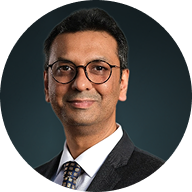


Nimesh Chandan has over 26 years of experience in the Indian Capital Markets. He has spent 22 years in Fund Management- managing and advising domestic and international investors, retail as well as institutional. Prior to joining Bajaj Finserv Asset Management Ltd., he has worked with Canara Robeco Asset Management as Head of Investments, Equities (Domestic and Offshore). He has also worked with other asset management companies including Birla Sunlife Asset Management, SBI Asset Management and ICICI Prudential Asset Management.
Sorbh Gupta has over 20 years of experience in the Indian Capital Markets. In November 2022, he was appointed as Head – Equity at Bajaj Finserv Asset Management Limited. Prior to joining Bajaj Finserv Asset Management Limited, he was associated with Quantum Asset Management Company Private Ltd. He has also worked with other financial companies such as Siddhesh Capital Markets Pvt. Ltd. and Pranav Securities Pvt. Ltd.
Siddharth Chaudhary joined the Company in July 2022 as a Senior Fund Manager – Fixed Income. Prior to this, he was associated with Sundaram Asset Management Co. Ltd from April 2019 - July 2022 as Head Fixed Income – Institutional Business. From April 2017 – March 2019, he served as a Head – Fixed Income, and from August 2010 – March 2017 as a Fund Manager – Fixed Income with Sundaram Asset Management Co. Ltd. During June 2006 – September 2010, he was working as Senior Manager, Treasury Dept in Indian Bank.
| Instruments | Indicative allocations (% of total assets) | |
| Minimum | Maximum | |
| Equities & Equity related securities^ of small cap companies | 65% | 100% |
| Equities & Equity related securities of other than small cap companies, equity & equity related securities of foreign companies | 0% | 35% |
| Money market instruments*, other liquid instruments, Units of InvITs, Units of Gold ETFs and Silver ETFs and units of Liquid, Overnight and Money Market Mutual Fund | 0% | 35% |
^Equity and Equity related instruments include (but not limited to) convertible debentures, equity warrants, convertible preference shares, equity derivatives and units of ReITs.
*Money market instruments will include commercial papers, commercial bills, Triparty REPO, Reverse Repo and equivalent and any other like instruments as specified by SEBI and Reserve Bank of India from time to time.
Bajaj Finserv Small Cap Fund
An open ended equity scheme predominantly investing in small cap stocks
Rs. 100/- and in multiples of Re. 1/- thereafter.
Nil
For each purchase of units through Lumpsum / switch-in / Systematic Investment Plan (SIP) and Systematic Transfer Plan (STP), exit load will be as follows:
If units redeemed/switched out within 6 months from allotment date:
If units redeemed/switched out after 6 months from allotment date, no exit load is payable.
to view Total Expense Ratio
A small cap mutual fund invests primarily in smaller listed companies. Small cap companies are ranked 251st onwards by full market capitalisation. A small cap equity mutual fund must invest at least 65% of its total assets in equity and equity-related instruments of small cap companies. These businesses may offer growth opportunities, but their shares can experience sharp price movements and lower liquidity.
When you invest in the Bajaj Finserv Small Cap Fund, you can choose between two types of plans: Direct Plan and Regular Plan. Both follow the same investment strategy, but the investment route and cost will differ.
| Aspect | Regular Plan | Direct Plan |
|---|---|---|
| How you invest | Through a registered mutual fund distributor | Directly with the asset management company |
| Assistance and guidance | Distributor assists with fund selection, investment amount, duration, and goal alignment | No distributor support; investor manages investments independently |
| Transaction support | Distributor helps with application and ongoing transactions | Investor handles all transactions |
| Expense ratio | Slightly higher due to distributor commissions | Relatively lower as there are no commission costs |
| Impact on returns | May be slightly lower due to higher expenses | May result in slightly higher net returns over time |
Before you invest in small cap funds, review your investment horizon, ability to handle losses, existing portfolio and the scheme’s investment approach.
A small cap MF, or small cap mutual fund, may suit investors who:
Small cap funds may experience relatively higher volatility and business-related risks, while large cap funds may experience comparatively lower volatility in certain market conditions. The suitability of either category may depend on an investor’s risk appetite, investment horizon, financial goals, and existing portfolio allocation.
| Aspect | Small cap mutual funds | Large cap mutual funds |
| Investment focus | Predominantly invest in small cap companies | Predominantly invest in large cap companies |
| Company size | Companies ranked below the top 250 by full market capitalisation | Companies ranked 1st to 100th by full market capitalisation |
| Risk level | Very high risk, with potentially considerable price fluctuations | Very high risk, as the funds remain exposed to equity market movements |
| Growth potential | May offer potential for long-term growth as smaller companies expand | May offer potential for long-term growth through exposure to established companies |
| Volatility | May experience relatively higher volatility | May experience comparatively lower volatility during certain market conditions |
| Liquidity risk | Certain holdings may have relatively lower liquidity | Large cap stocks generally have higher market participation, although liquidity risk remains |
| Investment horizon | May be considered in the context of long-term investment goals | May be considered in the context of long-term investment goals |
| Suitable for | Investors with a high risk appetite who can tolerate considerable fluctuations | Investors seeking equity exposure with a comparatively lower tolerance for volatility |
Small cap mutual funds and mid cap mutual funds invest in different market capitalisation segments and therefore have different risk characteristics and growth potential. Small cap funds may involve relatively higher volatility and uncertainty, while mid cap funds may also experience considerable fluctuations.
This table summarises the comparison:
| Aspect | Small cap mutual funds | Mid cap mutual funds |
| Investment focus | Predominantly invest in small cap companies | Predominantly invest in mid cap companies |
| Company size | Companies ranked below the top 250 by full market capitalisation | Companies ranked from 101st to 250th by full market capitalisation |
| Volatility | Generally more volatile than mid cap segment | Generally less volatile than small cap segment |
| Liquidity risk | Certain holdings may have relatively lower liquidity | Liquidity may vary across individual holdings |
| Investment horizon | Generally considered in the context of long-term investment goals | Generally considered in the context of long-term investment goals |
| Suitable for | Investors with a very high risk appetite who can tolerate considerable fluctuations | Investors with a very high risk appetite who can tolerate considerable fluctuations |
You can invest in the Bajaj Finserv Small Cap Fund either online or offline, directly with Bajaj AMC or through a registered mutual fund distributor. If you invest online through the Bajaj AMC website, follow these steps:
To invest offline, you will need to fill out an application form and submit it independently or through a distributor at any official point of contact (OPAT) of the AMC.
The Bajaj Finserv Small Cap Fund is taxed as an equity mutual fund. The following tax rates apply:
| ELSS Tax Saver Fund | Healthcare Fund | Multi Cap Fund |
|---|---|---|
| Large and Mid Cap Fund | Flexi Cap Fund | Large Cap Fund |
| Consumption Fund | Banking and Financial Services Fund |
| Equity Funds | Debt Funds | Hybrid Funds | Index Funds |
|---|---|---|---|
| Exchange Traded Fund Funds | Savings+ | Mutual Funds |



A small cap equity fund invests at least 65% of its total assets in equity and equity-related instruments of companies ranked 251st onwards by full market capitalisation. The remaining allocation follows the scheme’s investment mandate.
Yes. A small cap mutual fund can experience sharp falls because smaller companies face business, market and liquidity risks. Your investment value can fall below the amount invested.
Small cap funds aim to generate potential long-term capital appreciation by investing in emerging businesses with growth potential. Since these funds invest in equities, returns are market-linked and can vary depending on market conditions, economic trends, and portfolio strategy. Returns are not guaranteed.
Small cap funds may be considered by beginners who understand equity market risks and are comfortable with market volatility. Since small cap funds can experience sharp short-term fluctuations, investors should consider their financial goals, investment horizon, and risk tolerance before investing.
Consider a small cap mutual fund for money you can leave invested for at least five years, preferably longer. A longer horizon gives businesses time to develop but does not eliminate losses or guarantee recovery.
An SIP spreads investments across different dates, buying more units when NAV is lower and fewer when it is higher. It helps you invest in small cap funds regularly but does not remove their market risk.
Consider a small cap MF when you have a long investment horizon, can tolerate substantial fluctuations and already have money set aside for emergencies and near-term expenses. Review how the allocation fits your existing portfolio.
Small cap funds invest in relatively smaller companies and may offer higher growth potential along with higher volatility. Mid cap funds invest in relatively more established companies and may offer a balance between growth potential and risk. The choice may depend on an investor’s financial goals, investment horizon, and comfort with market fluctuations.
Large cap funds invest in established companies that may offer relatively greater stability during market fluctuations, while small cap funds invest in emerging companies that may experience higher volatility. Investors may choose between them based on their risk appetite, financial goals, and investment horizon.
Bajaj Finserv Small Cap Fund follows a research-backed investment approach that focuses on company fundamentals, governance practices, business sustainability, and valuation discipline. The fund also actively monitors portfolio risks while investing in small cap opportunities across sectors.
Small cap funds may not be suitable for short-term investment horizons because their underlying stocks may experience considerable price fluctuations. They are generally considered in the context of long-term investing, where investors may have time to withstand market volatility.
Small cap funds may be suitable for investors with a high risk appetite and a long-term investment horizon. Their portfolios may be more volatile because they invest predominantly in small-cap companies.
There is no single small cap fund that is best for everyone. Compare the investment approach, portfolio concentration, liquidity, expenses and performance against the relevant benchmark, then assess whether the scheme fits your goals and risk tolerance.
A new small cap fund has a limited scheme-level performance history. Review its investment mandate, fund management team, portfolio-building approach, expenses and Riskometer instead of relying on launch publicity or a ₹10 starting NAV.












Call, chat or write to us if you
need investment help

Toll-free number
Write to us at
Investor WhatsApp channel
Share your details and our experts will guide you.

By submitting my details, I agree to receive a call from
Bajaj AMC for assistance.

Need help planning your investments?

Our Investment Philosophy reflects what we, as an organisation, believe will generate a good return on equity investment for our investors in the long term. It dictates our goals and guides decision making.
Alpha (a) is a term used in investing to describe an investment strategy’s ability to beat the market.
Alpha is thus also often referred to as excess return or the abnormal rate of return in relation to a benchmark, when adjusted for risk. Essentially, it means doing better than the crowd without taking disproportionate risk.

Collecting superior information
Analysts and portfolio managers strive to collect superior information about the business and the management of the company. They try to generate superior earnings forecast and the balance strength of the company and the industry, thereby trying to 'beat the market' on information edge. This is an important source of alpha for an investor. However, over the years, retaining the information edge has become more difficult and expensive. With a whole lot of investors trying to collect superior information, how can an investor be sure to continuously have accurate and material information about the companies, ahead of others, all the time?

Processing information better
Even if you don't have material information earlier than the crowd, you can still generate better outcomes if you are able to process this information better. Investors develop models and algorithms with enhanced predictive powers to forecast the next move. Fund managers who invest based on some pure formal analytical models are quantitative managers. Here, the goal is to try and beat other investors based on the sophistication of procedures or analytics. The analytical edge can be quite useful until it gets copied by many, and then it may stop generating superior returns.

Exploiting behavioural biases
As the name suggests, this edge is achieved by superior behaviour in reacting to the inputs available to maximise alpha. Modern finance assumes people behave with extreme rationality. However, researchers in behavioural finance have shown that this is not true. Moreover, these deviations from rationality are often systematic. Behavioural managers try to exploit situations where securities are mispriced by the market because of behavioural factors. At Bajaj AMC, we endeavour to combine the best of these edges.