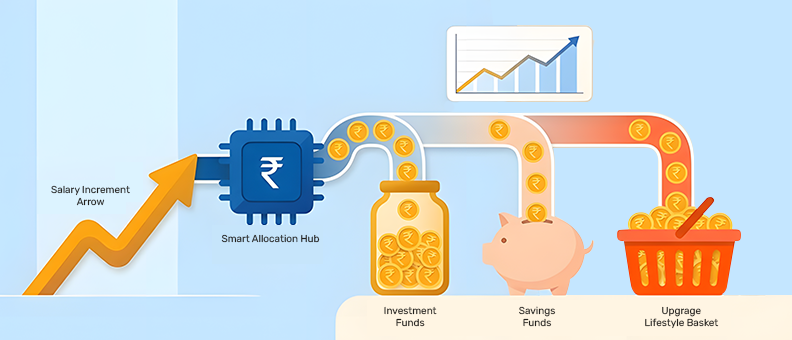
A salary increment can feel rewarding. It reflects your hard work and may indicate that your income is moving in the right direction. But once the excitement settles, the question is simple. What can you do with the extra money? The answer does not have to be saving everything or spending everything. A balanced approach is to give every part of your raise a clear purpose, so it can support your present needs, future goals, and overall financial comfort.
Avoid Letting Expenses Rise Too Fast
When income increases, spending often increases too. This is natural, but you may want to avoid using the full raise on lifestyle upgrades. Before adding new expenses, consider how much of the extra income can go towards saving, investing, and personal spending. A simple approach can help. Invest some, save some, and spend some.
Increase Your SIP or Start One
If you already invest through an SIP, you may consider increasing your monthly SIP amount in line with your salary increment. This can help you save more without making a major change to your lifestyle. Even a small annual increase may make a difference over time, as your money gets more time to potentially grow.
If you have not started investing yet, your salary increment can be a suitable reason to consider beginning an SIP. SIPs allow you to invest a fixed amount regularly, so you do not need a large sum at once. They may also help build financial discipline, as investing becomes a monthly habit rather than a one-time decision. Over time, this habit can support long-term goals such as buying a home, funding education, or building retirement savings.
Build or Strengthen Your Emergency Fund
Your raise can also help you create a safety cushion. You may want to keep enough money to cover a few months of basic expenses. This money can be kept in options that are easy to access, such as a savings account, fixed deposit, or liquid fund. An emergency fund may help you manage unexpected situations without disturbing your long-term investments.
Use FDs and RDs for Short-Term Goals
Fixed deposits and recurring deposits can be suitable for short-term goals. For example, you may want to save for a holiday, a family function, a course, or a planned purchase. These options may offer relatively stable savings, though returns can vary based on interest rates and tenure. They can help when you want to keep money aside for a specific goal.
Returns on fixed deposits/savings accounts are fixed, however, returns on mutual funds are subject to market risks.
Add Gold in Moderation
Gold can have a place in a financial plan because it may help diversify your savings. You can consider options such as digital gold, gold ETFs, sovereign gold bonds, or physical gold, depending on your comfort and goals. However, avoid putting a large part of your salary increment into gold, as its value can fluctuate and it may not always move in line with other investments. Treat gold as a supporting part of your financial plan, along with a suitable mix of savings and investments.
Repay Costly Loans Faster
If you have high-interest loans, such as credit card dues or personal loans, you may consider using part of your increment to repay them faster. These loans can take up a noticeable share of your income through interest payments. Reducing them may help lower your monthly burden and may free up money for savings, investments, or other goals over time.
Conclusion
A salary increment is an opportunity to pause, plan, and review your money habits. By investing a part of it, saving for near-term needs, managing debt, and keeping some room for personal spending, you can use your raise in a balanced way. The goal is not just to earn more, but to use your money in a way that supports your current needs and the future you are working towards.