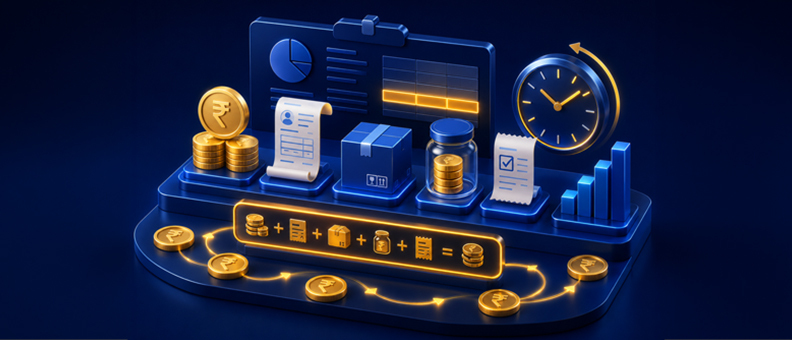
Current assets are assets that a company expects to convert into cash, sell or use within a short period, usually within one year or its normal operating cycle. These may include cash in hand, bank balances, money expected from customers, inventory that may be sold and short-term investments. Since these assets support daily operations, they help indicate whether a business has enough near-term resources to meet its immediate expenses and obligations.
Table of Contents
Importance of current assets
Current assets are resources that are expected to be realised, sold or consumed within 12 months after the reporting date or within the company’s normal operating cycle, whichever is applicable.
These assets help support a company’s day-to-day operations and working capital requirements. Common examples include cash, bank balances, inventory, trade receivables and certain short-term investments.
Since current assets are generally expected to be converted into cash or utilised within a relatively short period, they are often used to evaluate a company’s short-term liquidity position.
Key features of current assets
Some key features of current assets are as follows:
- Short-term nature: Current assets are expected to be realised, sold, consumed, or converted into cash within one year or within the company’s normal operating cycle.
- High liquidity: Current assets are generally more liquid than non-current assets and are expected to be realised within a shorter period.
- Financing: Current assets are used to support short-term operational requirements and working capital needs.
- No depreciation: Current assets are generally not subject to depreciation. However, certain current assets may be adjusted for impairment, obsolescence, or valuation changes where applicable.
Types of current assets
Common types of current assets include:
- Cash and cash-equivalents: These include physical cash, bank balances, and highly liquid investments with short maturities.
- Accounts/trade receivables: These represent amounts owed to the business by customers for goods or services supplied on credit.
- Inventory: Inventory includes raw materials, work-in-progress, and finished goods held for production or sale.
- Short-term investments: These include investments that are intended to be realised within 12 months or are held primarily for short-term purposes.
- Loans: These include loans and advances that are expected to be recovered within 12 months from the reporting date.
- Prepaid expenses: These are payments made in advance for goods or services that will be used in the future, such as prepaid rent, insurance or subscriptions.
- Other current assets: These may include assets that are expected to be realised or used within 12 months but do not fall under the main categories, such as prepaid expenses, current tax assets or other recoverable amounts.
Current assets formula
Current assets are generally calculated by aggregating all items classified as current assets in the balance sheet.
A commonly used formula is:
Current Assets = Inventories + Current Investments + Trade Receivables + Cash & Cash Equivalents + Bank Balances (other than Cash and Cash Equivalents) + Short-term Loans + Other Financial Assets + Current Tax Assets (Net) + Other Current Assets
Current assets calculation: An example
Consider the following extract from a company’s balance sheet:
| Particulars | Amount (Rs.) |
| Cash & bank balance | 5,00,000.00 |
| Accounts receivables | 3,00,000.00 |
| Inventory | 4,00,000.00 |
| Short-term investments | 2,00,000.00 |
Using the formula above:
Current Assets = ₹5,00,000 + ₹3,00,000 + ₹4,00,000 + ₹2,00,000 = ₹14,00,000
Therefore, the total value of current assets is ₹14 lakh.
Numbers shown are for illustrative purposes only
Why current assets matter to investors
Current assets can help investors understand a company’s short-term financial strength. Since these assets are expected to be converted into cash or used within a short period, they give an indication of whether the company has enough resources to manage daily operations, pay short-term obligations and handle working capital needs.
Investors often look at current assets along with current liabilities to assess liquidity. For example, if a company has healthy current assets but very high current liabilities, its short-term financial position may still need closer review.
The quality of current assets also matters. A high level of receivables may indicate pending customer payments, while excess inventory may suggest slower sales or weak demand. On the other hand, adequate cash, bank balances and efficiently managed receivables may point to better liquidity management.
Therefore, current assets are not viewed only by their total value. Investors may also assess their composition, quality and movement over time to understand how efficiently a company manages its short-term resources.
Current assets vs non-current assets
As per Schedule III of the Companies Act, 2013, assets that do not meet the criteria for classification as current assets are generally classified as non-current assets. Here’s a look at the differences between current and non-current assets.
| Current assets | Non-current assets |
| Expected to be realised within a year | Held for more than a year |
| Higher liquidity | Lower liquidity |
| Used to finance day-to-day operations | Used for financing longer term business needs |
| Examples: Cash, Inventory, Trade Receivables | Examples: Plant, Machinery, Buildings |
The classification of an asset may change over time. For example, a long-term investment approaching maturity within the next financial year may be reclassified as a current asset.
Current assets and current ratio
The current ratio is a financial metric used to assess a company’s ability to meet short-term obligations using its current assets.
The formula is:
Current Ratio = Current Assets ÷ Current Liabilities
A current ratio greater than 1 indicates that current assets exceed current liabilities. However, the adequacy of a company’s liquidity position depends on factors such as industry characteristics, operating cycles, and the quality of current assets.
For this reason, the appropriate current ratio may vary across industries and business models.
How to manage current assets efficiently
Managing current assets efficiently can help a business meet short-term obligations while keeping day-to-day operations running smoothly. Here are some strategies:
- Inventory management: Monitoring inventory levels may help reduce excess stock, lower holding costs, and improve cash conversion efficiency.
- Receivables management: Establishing clear credit policies and regularly reviewing receivables may help improve collections and support liquidity requirements.
- Cash and liquidity planning: Maintaining adequate cash and cash equivalents may help businesses meet operational requirements and working capital needs. Excess cash balances may be deployed in suitable short-term instruments, subject to liquidity requirements and risk considerations.
- Working capital cycle: Regularly reviewing the cash conversion cycle may help identify operational inefficiencies and improve working capital utilisation.
Conclusion
Current assets are an important component of a company’s balance sheet and play a key role in supporting day-to-day operations. They are commonly used to assess liquidity, working capital efficiency, and short-term financial strength. Investors, analysts, management teams, lenders, and other stakeholders often evaluate current assets when assessing a company’s short-term financial position and overall financial health.
FAQs
What are current assets in simple words?
Current assets are assets that a business expects to convert into cash, sell, or use within one year or within its normal operating cycle.
What are examples of current assets?
Examples include cash, bank balances, trade receivables, inventory, short-term investments, and certain loans and advances.
Why are current assets important?
Current assets help businesses meet short-term operational requirements, manage working capital, and maintain liquidity.
What is the formula for calculating current assets?
Current Assets = Cash and Cash Equivalents + Trade Receivables + Inventory + Marketable Securities + Prepaid Expenses + Other Current Assets
What is the difference between current assets and fixed assets?
Current assets are expected to be realised, sold, or consumed within a relatively short period, whereas fixed assets are generally used in business operations over multiple years.
What is a good current ratio?
A current ratio above 1 is often viewed as an indicator that current assets exceed current liabilities. However, the appropriate ratio varies across industries, operating cycles, and business requirements.
How do investors interpret changes in current assets?
Investors may review changes in current assets to understand a company’s liquidity, working capital position and operational efficiency. A rise in current assets may indicate improved short-term resources, while a decline may require closer review of cash, receivables, inventory and current liabilities.