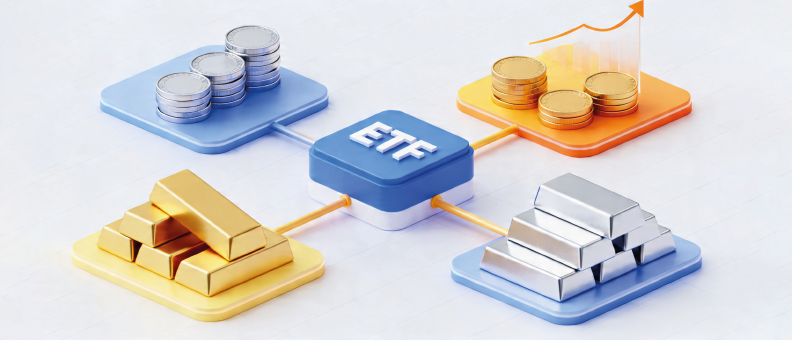
When you consider investing in a precious metals ETF, gold usually enters the conversation first because of its safe-haven image, but silver, platinum, and palladium each behave differently. Silver sits between a store of value and an industrial metal. Platinum and palladium are more tightly tied to industrial demand, especially in sectors like automotive and manufacturing. That is why a “precious metals” allocation is not one single idea. It is really four different risk profiles wearing the same label. Globally, the ETF market already reflects that spread, with large products tracking gold, silver, platinum, palladium, and even baskets of all four metals.
For you as an Indian investor, the more practical point is this—exchange-listed access is strongest for gold and silver. Platinum and palladium are less accessible through domestic ETF options. So, once you move away from the mainstream products, the convenience, liquidity, taxation, and portfolio role may be very different.
What is a precious metals ETF?
A precious metals ETF is an exchange-traded fund that gives you market-linked exposure to one or more precious metals without requiring you to buy, store, insure, or verify physical bars or coins.
Depending on the product, the ETF may hold the physical metal directly or use other structures to track the metal’s price. In India, gold and silver ETFs are the main examples you will see on exchanges. Globally, the menu is broader and includes platinum, palladium, and basket funds that combine multiple metals.
Precious metals ETFs offer exchange-traded access, demat convenience, transparent pricing, and no purity concerns. But you are still exposed to price volatility, tracking error, expense ratio drag, and liquidity differences between funds, which may impact returns.
Types of precious metals ETFs
The broad categories of precious metals ETFs are straightforward and based on their structure and metal exposure:
- Single-metal ETFs track one metal such as gold, silver, platinum, or palladium.
- Basket ETFs combine more than one precious metal in the same fund.
- In India, gold and silver ETFs are typically backed by physical bullion. Globally, some products may use derivatives or futures-based exposures depending on market structure and regulation.
For Indian investors, direct domestic ETF options are concentrated in gold and silver. The NSE’s ETF listings clearly show multiple gold and silver products, while platinum exposure is generally discussed as an overseas route because no platinum ETF is listed on Indian exchanges as of now.
Palladium access for Indian retail investors is similarly more of an international-market story than a mainstream domestic ETF story.
The four key precious metals covered: Gold, silver, platinum, and palladium
Understanding how each precious metal behaves can help you see why they play different roles within a portfolio allocation:
Gold – the defensive anchor
Gold is usually the defensive metal. You look at it when inflation risk, currency weakness, geopolitical stress, or financial market anxiety rises. It often plays the role of portfolio insurance rather than a growth engine.
Silver – the hybrid metal
Silver is less stable than gold because it has a stronger industrial side. That makes it more volatile, but it also gives it upside potential during strong industrial and manufacturing cycles.
Platinum – the industrial specialist
Platinum is more niche for most investors. It is rarer, more industrially sensitive, and usually more cyclical. It has a range of industrial uses and can see sharp re-rating when supply-demand conditions tighten.
Palladium – the auto-driven metal
Palladium is also more niche and highly influenced by industrial demand, particularly from the auto-catalyst segment. Like platinum, it tends to be cyclical and can experience sharp price movements based on changes in supply-demand dynamics.
Benefits of investing in precious metals ETFs
Understanding the key benefits of precious metals ETFs can help you see how they may fit into your overall investment approach:
Convenience and ease of access
You can buy and sell precious metals ETFs through your demat and trading account without dealing with storage, theft risk, or purity verification.
Diversification potential
Precious metals, especially gold, may help diversify a portfolio as they do not always move in line with equities or traditional debt instruments.
Liquidity and tradability
Being exchange-traded, these ETFs can be bought or sold during market hours, offering relatively easy entry and exit.
Cost efficiency
ETFs may reduce costs associated with making charges, storage, and insurance that come with physical metal ownership.
Transparency and pricing clarity
ETFs provide clear visibility on pricing and structure, with SEBI’s updated valuation framework aligning gold and silver prices more closely with domestic spot rates.
Risks and considerations
Being aware of the potential risks can help you set realistic expectations and make more informed investment decisions:
- Precious metals are not risk-free, and prices—especially for gold and silver—can correct sharply after periods of strong performance.
- Silver may be more volatile than many first-time investors expect due to its dual role as both a precious and industrial metal.
- Platinum and palladium prices can fluctuate more due to smaller market size and stronger dependence on industrial demand.
- ETF returns may differ from the underlying metal price because of factors such as expense ratios, cash holdings, and tracking inefficiencies.
- Liquidity can vary across ETFs, and lower trading volumes in some funds may make entry and exit less smooth.
Factors to consider before investing
Looking at a few key factors before investing can help you choose the right metal and ETF structure based on your goals and risk comfort:
- Define the role in your portfolio and risk comfort: Decide whether you are looking for stability (gold) or higher return potential with more volatility (silver and other metals), based on your comfort with price swings.
- Check expense ratio and tracking quality: Lower costs and efficient tracking may help you stay closer to the underlying metal’s performance.
- Look at AUM, trading volume, and liquidity: Larger and more actively traded ETFs may offer smoother entry and exit, while thinly traded funds can be less efficient.
- Consider access and ease of execution: Gold and silver ETFs are easier to access in India, while other metals may require overseas investing routes.
- Be aware of taxation: Tax treatment may differ from other asset classes, so it is worth understanding how returns could be taxed.
- Align with your investment horizon: Precious metals may behave differently over short and long periods, so your holding period matters.
Top precious metals ETFs in 2026
If you are investing from India, the most accessible exchange-traded options in precious metals continue to be gold and silver ETFs listed on domestic exchanges.
Gold ETFs remain widely tracked and actively used by investors, while silver ETFs have also seen growing participation with multiple options now available in the market.
At a global level, the universe is broader, with ETFs offering exposure not only to gold and silver but also to platinum, palladium, and diversified baskets that combine multiple precious metals within a single product.
Precious metals ETFs vs. physical metal ownership
A quick comparison can help you decide which option may better suit your investment needs:
| Aspect | Precious Metals ETFs | Physical Metal Ownership |
| Ownership experience | You hold the investment digitally through your demat account | You physically hold the metal, which may offer emotional comfort to some investors |
| Convenience | Easy to buy, sell, and track through your trading account | Requires effort to buy, store, and manage securely |
| Storage and safety | No storage or theft concerns at the individual level | Involves storage costs and potential theft risk |
| Costs involved | Includes expense ratios and brokerage charges | May include making charges, storage costs, and resale deductions |
| Liquidity | Can be traded during market hours, offering relatively easy entry and exit | Liquidity depends on finding a buyer and may involve price negotiation |
| Portfolio integration | Fits easily into a diversified financial portfolio | Less flexible to integrate with financial assets |
How to invest in precious metals ETFs
You need a demat and trading account. Once that is set up, you can buy a metal ETF like any listed security. Before buying, check the fund objective, expense ratio, liquidity, and bid-ask spread. Do not invest simply because the metal theme looks strong on social media.
A practical approach may be to define the purpose first, then the allocation size. For most retail portfolios, metals are usually a supporting allocation, not the whole strategy.
Taxation of precious metals ETFs for Indian investors
Understanding how precious metals ETFs are taxed can help you evaluate returns more realistically:
| Holding Period | Type of Gain | Tax Treatment |
| Up to 12 months | Short-term capital gains (STCG) | Taxed as per your applicable income tax slab rate |
| More than 12 months | Long-term capital gains (LTCG) | Taxed at 12.5% without indexation |
- Precious metals ETFs are not treated as equity funds and are taxed similarly to physical gold and silver.
- The ₹1.25 lakh annual LTCG exemption available to eligible equity investments does not apply here.
- Capital gains tax applies only when you sell the ETF units at a profit.
- It may be useful to evaluate these investments based on post-tax returns, not just pre-tax performance.
How precious metals ETFs fit in a portfolio
Precious metals ETFs offer a simple and efficient way to add metals like gold and silver to your portfolio without the challenges of physical ownership. Each metal plays a different role—gold may offer stability during uncertain times, while silver and other metals can introduce more cyclical or tactical opportunities.
At the same time, it is important to remember that these are not risk-free investments. Prices can be volatile, returns may vary due to tracking differences, and taxation can influence your overall outcomes. That is why it helps to look beyond short-term trends and think about how these investments fit into your broader financial plan.
If your goal is to build a more balanced and diversified portfolio, precious metals ETFs may have a role to play—but the right allocation will depend on your risk comfort, investment horizon, and overall objectives.
Conclusion
Precious metals ETFs look simple on the surface, but they reward clarity. Gold is still often seen as the default hedge. Silver is typically more volatile than gold. Platinum and palladium are more specialised and less convenient for Indian investors through domestic ETFs right now. The gap between these metals is exactly why lumping them together may lead to sub-optimal portfolio decisions.
So, it helps to be clear about why you are buying them, how easily you can access them, what it costs you to hold them, and how they may behave when the rest of your portfolio is under pressure. If you get that part right, precious metals ETFs may move from being a trend trade to becoming a more deliberate allocation.
Frequently Asked Questions
What is the least risky precious metals ETF?
Gold ETFs are generally considered to be the least risky among precious metals ETFs because gold tends to behave more defensively than silver, platinum, or palladium. It is still volatile, just less cyclical than the others.
Can Indian investors buy precious metals ETFs?
Yes, Indian investors can buy gold and silver ETFs through stock exchanges using a demat and trading account. Platinum and palladium ETF access is usually more limited and may involve overseas routes.
Is gold ETF better than physical gold?
For convenience, liquidity, and portfolio use, gold ETFs are often considered more practical. For personal possession and emotional comfort, physical gold may appeal more.
Which precious metal ETF performed in 2025–2026?
Silver ETFs as a category have at times shown strong performance during FY26.
Which ETF holds both gold and silver?
Some multi-metal or combination products can give exposure to more than one metal. Globally, basket-style products exist, though many hold more than just gold and silver.
Is there a silver ETF in India?
Yes, India has multiple listed silver ETFs on the exchanges.
Are precious metals ETFs safe?
They are regulated market products, but they are not “safe” in the sense of guaranteed returns. They reduce storage and purity risk, not market risk.
What is the best precious metal ETF?
There is no single “best” precious metal ETF, as the right choice depends on your investment objective, risk comfort, and the metal you want exposure to. Gold ETFs are often preferred for stability, while silver and other metals may appeal more to investors looking for higher return potential with greater volatility.
Which precious metal (ETF) is best in India?
In India, gold and silver ETFs are the most accessible and widely used options, but the “best” choice may depend on your investment goals, time horizon, and preference for stability versus potential upside. Gold ETFs are typically considered for relatively stable allocation, while silver ETFs may suit more tactical or cyclical exposure.
Past performance may or may not be sustained in future