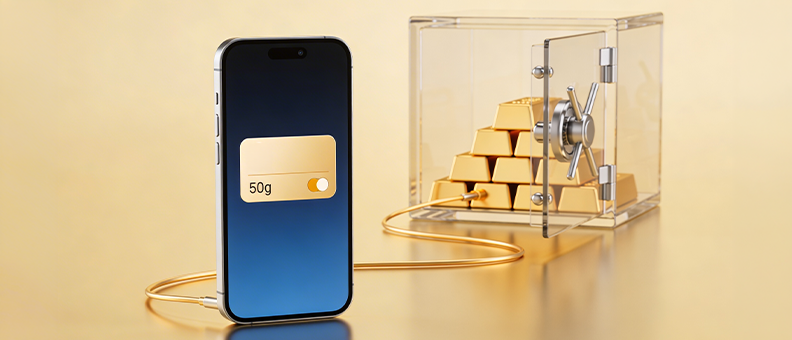
Buying gold no longer always means visiting a jeweller. Many online platforms now allow people to buy small quantities through an app or website. But convenience should not be confused with regulation or guaranteed liquidity.
Digital gold is usually offered through a private platform that records your purchase electronically and may arrange for gold to be stored on your behalf. The provider’s terms, custody arrangement, charges and delivery rules can differ widely, so these details deserve a close look before any purchase.
Table of Contents
What is digital gold?
The digital gold meaning is straightforward: it is gold bought online in small quantities, with the purchase recorded digitally rather than handed over as coins or jewellery at the time of purchase. Depending on the platform’s arrangement, the provider may state that equivalent physical gold is stored with a custodian or vaulting partner.
However, what is digital gold in practice can vary from one platform to another. The buyer should check who holds the gold, how ownership is documented, whether independent audits are available, the applicable storage period and the conditions for selling or taking physical delivery.
How does digital gold work?
Digital gold is usually bought through an online platform, which records the buyer’s holding electronically:
- The buyer registers on the platform and completes KYC, where required.
- The buyer purchases a chosen rupee amount or weight of gold at the platform’s displayed rate.
- The platform records the holding and, depending on its arrangement, may store the corresponding gold with a custody partner.
- The buyer may sell the holding through the platform or request physical delivery if the provider offers it and the required quantity is met.
The exact arrangement can differ across platforms, so check how the gold is held, the applicable charges and the delivery or sale process before buying.
How to buy digital gold online: Steps to follow
A few checks can make the purchase process clearer:
- Choose a platform only after reviewing the entity offering the product, its terms and its stated custody arrangement.
- Complete registration and KYC, where required by the platform.
- Check how your gold holding will be recorded and whether transaction statements or audit information are available.
- Compare the displayed buy price with the sale quote, along with GST and any delivery, storage or redemption charges.
- Select the amount or weight of digital gold you wish to buy and complete the payment through the platform.
- Download the invoice and transaction record after the purchase is completed.
- Review the minimum quantity, charges and process for physical delivery, sale or redemption.
- Check the provider’s terms for account closure, service discontinuation or changes to the platform’s offering.
Benefits of digital gold
Digital gold may offer a few practical conveniences for people who want to buy gold online:
Small-value purchases
Many platforms allow buyers to start with a chosen rupee amount instead of purchasing a full coin or bar.
Online access
Gold can be bought or sold through a platform without visiting a jeweller or storing the metal at home immediately.
No immediate physical storage
The platform may arrange custody for the gold, subject to its stated storage and ownership terms.
Transaction records
Platforms usually provide a digital record of purchases, holdings and sale transactions, which can make it easier to track the quantity bought and retain documentation.
No jewellery-making charges
Unlike jewellery purchases, digital gold does not involve design or making charges, although platform spreads, GST and delivery charges may still apply.
Physical delivery option
Some platforms allow buyers to request coins or bars after their holding reaches the required minimum quantity.
Fees and charges associated with digital gold
The displayed gold price is only one part of the cost. Digital-gold platforms can have different pricing and delivery terms, so it helps to check the final payable amount before buying:
- Buy-sell spread: The price at which you buy gold may be higher than the price at which the platform allows you to sell it.
- GST: Applicable taxes may be added to the purchase value.
- Delivery charges: Physical delivery can involve minting, packaging and shipping charges.
- Storage charges: Some providers may charge for storage after a stated free period.
- Sale or redemption conditions: Minimum quantities, processing charges and other conditions may apply when selling the holding or requesting delivery.
Compare the purchase price, the sale quote and any delivery-related costs instead of looking only at the headline gold rate.
Digital gold vs other gold options
Gold can be accessed in several ways, and each route differs in how it is held, priced and regulated:
| Feature | Digital gold | Physical gold | Gold ETF | Gold mutual fund |
| Form of holding | Platform record linked to a provider arrangement | Coins, bars or jewellery held by the buyer | Units usually held in demat form | Mutual fund units |
| How it is bought | Through an online platform | From a jeweller, bank or dealer | Through a stock exchange using a trading and demat account | Through a mutual fund platform or distributor |
| Regulatory position | Outside SEBI’s purview | Not a securities-market product | SEBI-regulated mutual fund product | SEBI-regulated mutual fund product |
| Pricing | Platform’s buy and sell quote | Gold rate plus applicable charges | Market price during trading hours | Applicable end-of-day NAV |
| Physical delivery | May be available, subject to platform terms | Available immediately | Not typically available to retail investors | Not available |
| Typical costs | Buy-sell spread, GST and delivery charges | GST, making charges and storage costs | Brokerage, expense ratio and demat charges | Expense ratio and, where applicable, exit load |
| Selling or redemption | Subject to platform terms and quoted price | Sold to a jeweller or dealer | Sold on the exchange during market hours | Redeemed with the fund at applicable NAV |
Taxation on digital gold
Tax on digital gold generally applies when the holding is sold or redeemed. In many cases, it is treated on similar lines to gold for capital-gains purposes.
If the holding period is more than 24 months, the gain is generally treated as long-term capital gain and taxed at 12.5% without indexation. If it is held for 24 months or less, the gain is generally treated as short-term and taxed at the investor’s applicable income-tax rate.
Keep the purchase invoice and transaction records, as they help establish the purchase cost and holding period.
Source: Ministry of Finance, CBDT capital-gains, July 2024.
The tax information in this article is based on prevailing laws at the time of publishing the article and is subject to change. Please consult a tax professional or refer to the latest regulations for up-to-date information.
Advantages and disadvantages of investing in digital gold
Digital gold can make gold purchases easier to access, but its convenience should be weighed against the way the product is structured and managed.
Advantages of digital gold
Some practical features of digital gold include:
- Small-ticket purchases: You may be able to buy gold for a chosen rupee amount instead of purchasing a full coin or bar.
- Online access: Transactions can usually be completed through an app or website without visiting a physical store.
- No immediate home storage: The gold is typically held through the platform’s stated custody arrangement, so buyers do not need to store it at home immediately.
- Physical delivery option: Some platforms allow physical delivery once the holding reaches their specified minimum quantity.
Disadvantages of digital gold
It is equally important to consider these limitations before making a purchase:
- Limited regulatory protection: SEBI has stated that online digital-gold products operate outside its regulatory purview and do not carry securities-market investor protections.
- Platform and counterparty risk: The buyer depends on the platform, its custody partner and the terms governing the holding.
- Buy-sell spread: The price at which gold can be bought and sold may differ, which can affect the value received on sale.
- Additional charges: GST, delivery, minting, storage or other platform charges may apply, depending on the provider’s terms.
- Different delivery conditions: Minimum quantities, delivery timelines and charges can vary across platforms.
Mutual funds as an alternative to digital gold
Investors comparing digital gold with regulated market products may also look at mutual fund-based gold exposure. A Gold ETF is a mutual fund scheme that trades on a stock exchange and generally requires a demat and trading account to buy or sell units.
A gold mutual fund usually invests in Gold ETFs and can be bought through a mutual fund platform at the applicable end-of-day NAV, without a demat account.
An SIP can be used for regular investments in a gold mutual fund scheme. An SIP calculator may help estimate the value of planned contributions over a chosen period. This route gives investors exposure to gold through a SEBI-regulated mutual fund structure rather than a platform-based digital-gold arrangement.
Source: SEBI circular on valuation of physical gold and silver held by mutual fund schemes, February 2026
Invest in gold and silver through Bajaj Finserv Multi Asset Allocation Fund
Bajaj Finserv Multi Asset Allocation Fund is an open-ended scheme that invests across equity, debt, money-market instruments, Gold ETFs, Silver ETFs, exchange-traded commodity derivatives, REITs and InvITs.
Its commodity allocation may include gold and silver through these permitted instruments. This allocation is dynamic and can change with the scheme’s strategy and market conditions. As per the scheme’s stated allocation pattern, commodity-related investments can range from 10% to 55% of total assets.
Unlike digital gold, the scheme does not involve buying or taking delivery of physical gold. Investors hold mutual fund units, while the fund may gain market-linked exposure to gold, silver and other asset classes through its portfolio.
For the latest portfolio and scheme details, please refer to the Bajaj Finserv Multi Asset Allocation Fund page.
Conclusion
Digital gold makes online gold purchases convenient, but the structure behind the transaction matters as much as the displayed price. Check the platform’s custody arrangement, charges, delivery policy and exit process carefully. It is also worth comparing digital gold with regulated alternatives such as Gold ETFs and gold mutual funds before deciding which format fits your purpose.
FAQs
Where can you buy digital gold in India?
Some online platforms offer digital gold purchases. Before using one, review its terms, custody arrangement, charges, delivery conditions and process for selling or closing the holding. Digital gold offered through online platforms is outside SEBI’s purview.
Is it safe to buy gold online?
Online buying can be convenient, but safety depends on the provider and its arrangements. Check the entity offering the product, the custodian, transaction records, audit disclosures, delivery terms and complaint-resolution process. Avoid treating a platform claim as a substitute for independent verification.
How is digital gold different from gold ETFs?
Digital gold is generally a platform-based arrangement for buying gold electronically. Gold ETFs are SEBI-regulated mutual fund products that trade on stock exchanges and are usually held in demat form. They differ in regulation, holding format, pricing, liquidity and investor-protection framework.
Is digital gold real gold?
Some platforms state that purchases are backed by physical gold held with a custodian. However, the buyer should verify the provider’s documentation, purity claims, custody details and audit disclosures rather than assuming that all digital-gold offerings work in the same way.
Can I take delivery of digital gold?
Some platforms allow physical delivery once a minimum quantity is reached. Delivery may involve minting, packaging and shipping charges, and the available coin or bar denominations can differ by platform.
Is digital gold regulated by RBI or SEBI?
SEBI has stated that digital gold products offered by online platforms are neither securities nor regulated commodity derivatives, and operate outside its purview. The investor-protection mechanisms available for securities-market products do not apply to such digital-gold offerings.
Is digital gold 24K / 999.9 pure?
Purity claims depend on the provider and its custody arrangement. Check the invoice, product terms, certification details and the documentation supplied for any physical delivery. Do not rely on a generic platform claim alone.
Can we sell digital gold?
Many platforms provide a sale option, but the price, timing, liquidity and applicable spread are determined by the platform’s terms. Check the sale process and any restrictions before purchasing.
What happens to my digital gold if the platform shuts down?
The answer should be set out in the platform’s agreement. Before purchasing, check the records that establish your holding, the identity of the custodian, the process for redemption or delivery, and what happens if the platform discontinues the service.
Is digital gold taxable?
Digital-gold transactions may have tax implications when sold or redeemed. The exact treatment can depend on the product structure, holding period and applicable tax rules. Retain invoices and transaction records, and seek tax advice for transaction-specific reporting.
Why is digital gold costly?
The final cost can include more than the quoted gold price. The difference between buy and sell prices, GST, delivery charges and other platform fees can affect the overall cost.