The best time to invest in mutual funds is not necessarily when the market reaches a particular level. A more useful starting point is when you have a clear goal, money you can set aside and enough time for the selected fund to work towards that goal.
Markets rarely provide an obvious signal. They may keep rising when they appear expensive or fall further after looking attractive. Instead of waiting for the perfect entry point, focus on whether the investment suits your financial position, risk tolerance and investment horizon.
Here is how to decide when to invest in mutual funds without making the process more complicated than it needs to be.
Key Takeaways
- The right time to invest depends more on your financial readiness than on short-term market predictions.
- A clear goal and suitable investment horizon can help you choose an appropriate mutual fund category.
- An SIP may suit regular monthly investing, while a lumpsum investment may suit money available at one time.
- A market correction is not automatically a reason to stop an SIP or make an unplanned additional investment.
- Reviewing the portfolio periodically can help keep the investments aligned with changing goals and finances.
When to invest in mutual funds
A suitable time to begin is when you know why you are investing, when you will need the money and how much you can invest without affecting essential expenses.
Starting earlier can give a long-term investment more time to grow through compounding. However, the investment still needs to match the goal. Money required for an upcoming expense should not be placed in a long-term equity fund merely because the market has fallen.
A useful question to ask is: “Can I leave this money invested for the required period?” This is often more helpful than trying to predict what the market will do next.
How to know if you are ready to invest
Before making an investment, check whether the following pieces are in place:
- You have identified the goal for which you are investing.
- You know approximately when the money will be required.
- You have kept enough money aside for regular expenses and emergencies.
- The planned investment amount is manageable alongside your other commitments.
- You understand that mutual fund returns are market-linked.
- The selected scheme matches your goal, timeline and comfort with market movements.
- You have reviewed the scheme’s investment objective, portfolio, costs and Riskometer.
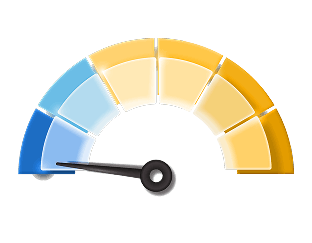
The Riskometer shows the risk level assigned to a mutual fund scheme. It can help you compare the scheme’s level of risk with your own risk appetite.
Source: SEBI Investor, Understanding the Riskometer.
Should you wait for the market to fall?
Waiting for a lower market level sounds sensible. The difficult part is knowing when the market has reached that level.
Suppose Priya, a 29-year-old software developer in Bengaluru, wants to start investing for a home purchase that is eight years away. She delays her SIP because the market appears expensive. Six months later, the market is even higher. She still does not know whether to invest or wait.
A planned SIP can remove some of this uncertainty. Each instalment purchases units at the applicable Net Asset Value. The same amount buys more units when the NAV is lower and fewer when it is higher. This is called rupee cost averaging.
Rupee cost averaging does not assure a profit or prevent losses. It helps spread purchases across different market levels and encourages regular investing without requiring Priya to predict each rise or fall.
Source: Association of Mutual Funds in India, Systematic Investment Plan.
Why the investment horizon matters
Your investment horizon is the period for which you expect to keep the money invested. It is one of the main factors in deciding which mutual fund category may suit the goal.
Money required soon has less time to recover from market fluctuations. A long-term goal provides more time, but that does not mean every high-risk fund automatically becomes suitable.
For instance, Priya’s eight-year home-buying goal may allow her to consider a different asset allocation from someone saving for a payment due next year. As her goal approaches, she may also need to review whether the money should remain exposed to the same level of market movement.
The goal should determine the horizon. The horizon should then guide the fund selection.
SIP or lumpsum: Which mode may suit you?
Your cash flow and the way the money becomes available can help you choose between an SIP and a lumpsum investment.
Systematic Investment Plan
A Systematic Investment Plan allows you to invest a fixed amount in a mutual fund scheme at regular intervals. An SIP may be suitable if:
- You plan to invest from your monthly income.
- You want to build a consistent investing habit.
- You prefer to spread your purchases across different market levels.
- You do not have a large amount available at one time.
An SIP is an investment method, not a separate mutual fund product. Its performance depends on the scheme selected and the market value of its underlying investments.
Lumpsum investment
A lumpsum investment involves investing an available amount at one time. It may be considered when:
- You receive a bonus, inheritance or maturity proceeds.
- The money is not required for an immediate expense.
- The selected scheme fits your goal and investment horizon.
- You are comfortable investing the full amount at the prevailing NAV.
Because the entire amount enters at once, a lumpsum investment is more sensitive to the market level on the investment date. This does not automatically make it better or worse than an SIP. The suitable mode depends on your circumstances.
Opportunity to rebalance the portfolio
Rebalancing means adjusting the portfolio when its asset allocation moves away from the mix selected for your goals. It is not an attempt to predict the next market rise or fall.
If equity markets rise sharply, equity may become a larger part of the portfolio than intended. A review may show that some money needs to be moved to another suitable asset class. After a market decline, the portfolio may require a different adjustment.
Reviewing your portfolio once a year can help you check:
- Whether the asset allocation still matches the goal.
- Whether your financial position or risk tolerance has changed.
- Whether the SIP amount remains adequate for the target.
- Whether an investment still performs the role for which it was selected.
- Whether the goal or its timeline has changed.
A market correction can provide an opportunity to review the portfolio, but it does not mean every investor should add more equity. Any change should remain connected to the original plan.
Factors that determine the right time to invest
The timing of an investment becomes clearer when you consider the following personal and market-related factors:
Financial goal
A clear goal gives the investment a purpose and timeline. Retirement, education, a home purchase and a near-term expense may require different fund categories and asset allocations.
Risk tolerance
Risk tolerance includes how comfortable you feel with fluctuations and how much financial risk you can afford to take. These are not always the same. A person may be emotionally comfortable with risk but still need the money too soon to accept a sharp decline.
Investment horizon
The time available before the money is needed affects the type of risk that may be suitable. A longer horizon may provide more time to remain invested through changing market conditions.
Cash flow and liquidity needs
An investment amount should fit comfortably within your monthly budget. Keeping money available for emergencies can also reduce the chance of having to redeem a long-term investment for an unexpected expense.
Market conditions
Market conditions can affect short-term returns, but they should not be the only reason for investing or waiting. Predicting market highs and lows consistently is difficult, even when current economic conditions appear clear.
Existing investments
A new investment should add a useful role to the portfolio. Holding several similar funds may increase overlap without providing meaningful additional diversification.
Scheme suitability
Recent returns should not be the only basis for choosing a scheme. Review its investment objective, asset allocation, Riskometer, costs, exit load and portfolio before investing.
Is there a perfect time to start investing?
There is no single market date that can consistently be described as the perfect time to begin. There can, however, be a personally suitable time.
That may be when your goal is clear, your essential finances are in order, the investment amount is sustainable and the chosen scheme matches your timeline. Once these pieces are in place, waiting indefinitely for a more attractive market level may not add much value.
What does Bajaj AMC offer?
Once you know your goal and how long you can stay invested, the next step is finding a fund that fits the plan.
Bajaj AMC offers equity, debt, hybrid and passive investment options for a range of goals and investment horizons. You can explore the available funds, compare their investment objectives and Riskometers, and choose to invest through an SIP or a lumpsum, subject to the scheme’s terms.
Not sure what monthly amount to begin with? The Bajaj AMC SIP calculator lets you try different amounts and tenures to see how they affect the estimated corpus. Investors with a one-time amount can use the lumpsum calculator to explore similar scenarios before deciding.
The calculators provide an estimate, while the final fund selection should still be based on the scheme’s objective, risk level and suitability for your goal.
A practical way forward
Begin with the goal rather than the market forecast. Work out when the money will be required, decide how much you can invest comfortably and then consider a mutual fund category that matches the timeline and risk involved.
If you invest from your regular income, an SIP can make the process easier to maintain. If you already have a one-time amount, a lumpsum investment may be considered after accounting for your liquidity needs and portfolio allocation.
Consistency matters, but so does suitability. A manageable plan that you understand is often more useful than waiting for a market entry point that looks perfect only in hindsight.
Frequently asked questions
Is now a good time to invest in mutual funds?
It may be a suitable time if you have a clear goal, adequate liquidity and an investment horizon that matches the selected scheme. Current market levels should be considered, but they should not be the only basis for the decision.
Is it good to invest in mutual funds when the market is high?
A high market level does not automatically mean you should avoid investing. If you are investing regularly for a long-term goal, an SIP can spread purchases across different market levels instead of requiring you to select a single-entry point.
Should I invest in mutual funds when the market is down?
A market decline may allow the same investment amount to purchase more units, but it is not automatically a buying signal. Invest only if the scheme suits your goal, asset allocation, investment horizon and ability to take risk.
Should I stop my SIP during a market correction?
A market correction alone is not a reason to stop an SIP. Consider pausing or changing it if your income, financial needs, goal or the suitability of the selected scheme has changed.
Is there a best date in the month for an SIP?
There is no consistently better SIP date. Choose a date that works with your salary or regular cash flow and makes it easier to keep enough money available for the instalment.
What is the minimum time for investing in mutual funds?
There is no common minimum investment period for every mutual fund. The suitable period depends on the scheme category, its underlying investments, exit-load conditions and the timeline of your goal.
Can I start investing in mutual funds after the age of 40?
Yes. The decision depends on the time remaining before each goal, your current savings, required investment amount and ability to take risk. Age alone does not determine mutual fund suitability.
How often should a mutual fund portfolio be reviewed?
A yearly review may be adequate for many long-term investors. Review it sooner if your income, expenses, family responsibilities, financial goals or investment horizon change significantly.
Our Funds