


“The investor’s chief problem and his worst enemy is likely to be himself.” – Benjamin Graham
This is one of the most powerful observations ever made around investing. I often come back to this quote because it captures one of the simplest truths about investing.
It shifts the focus away from the market to something more powerful: human behaviour.
Most of us think that the biggest risks to our investments are market crashes, inflation, interest rates or geopolitical events.
These risks do matter.
But over the years, I have realized that the biggest risk to long-term wealth creation is often not what happens in the market, but how we react to what happens in the market.
Every major market crisis in history has looked different.
The dot-com bubble was about technology.
The Global Financial Crisis was about housing and leverage.
The Covid crash was about a pandemic.
More recently, periods of rising inflation, geopolitical uncertainty and interest rate hikes have repeatedly tested investor confidence.
Yet, most investor behaviour remained similar across all of them.
One of the great ironies of investing is that two investors can own the same investment and still end up with very different outcomes.
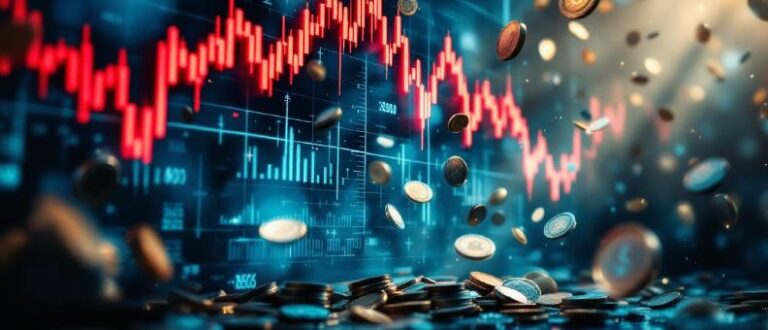
Every market correction creates two kinds of losses. The first is caused by markets. And the second is caused by investors.
History suggests the second is often larger.
When markets fall, fear takes over. Fear of losses often forces investors to exit. When markets are uncertain, many investors do what any normal human being would do. They would chase certainty. They would want to stop the loss. They would want safety. So, they exit and wait for clarity to return. And then something interesting happens.
Historically, markets have always recovered. Not immediately. Not predictably. But they eventually do. And this is when most investors miss out on the recovery.
I have rarely met investors who have regretted staying invested for 15 years. But I have met many who regret the decision to exit when markets were choppy.
That is why emotions matter so much in investing.
Fear makes us believe that temporary declines are permanent. Greed convinces us that good times will last forever. Impatience makes us expect long-term returns in the short-term. Together, these emotions often create a gap between market returns and investor returns.
These emotions are as natural as they come. This is completely normal; every investor experiences them. The difference is how investors manage these emotions.
In my opinion, successful investors are rarely the ones who predict the markets accurately but the ones who remain calm when others react emotionally to market ups and downs.
What makes this harder today is the amount of information that we have access to. A generation ago, investors checked market updates occasionally. Today, the market is in our pockets.
News alerts, social media posts, expert opinions and WhatsApp forwards compete for our attention every day. The challenge is no longer access to information. The challenge is how we react to this information overload.
Wealth creation is rarely destroyed by lack of intelligence or access to information. It is often destroyed by fear, greed, impatience, overconfidence and emotional reactions to market swings.
Markets will always be unpredictable. There will always be a reason to worry. The real challenge is how we can remain disciplined to a long-term plan when emotions urge us to do the opposite.
History has shown that markets have recovered from wars, recessions, pandemics and financial crises. The bigger question is whether investors can stay invested long enough to benefit from that recovery.
Because in investing, the biggest risk is often not the market itself.
It’s how we react to it.
Past performance may or may not be sustained in future.