

India’s financial sector is changing in ways that go well beyond the growth of banks.
Payments are becoming digital. More individuals and small businesses are entering the formal credit system. Insurance and investment products are reaching a wider set of households. At the same time, NBFCs, fintech platforms, asset managers and capital-market businesses are taking on a larger role.
These shifts are being shaped by technology, financial inclusion, demographics and changing consumer behaviour. The Bajaj Finserv Banking and Financial Services Fund seeks to participate in these shifts by investing across the wider banking and financial-services ecosystem. Such structural changes are known as megatrends and can have a wide-ranging impact on businesses, economies and societies, creating potential investment opportunities for the long term.
Understanding the banking and financial-services sector
The banking and financial services sector helps move money through the economy. It brings together institutions that collect savings, provide loans, process payments, offer insurance and enable participation in capital markets.
It includes banks, non-banking financial companies, insurers, asset management companies, brokers, exchanges, wealth-management firms, rating agencies and fintech platforms.
This means the sector is no longer shaped only by traditional lending. It now includes businesses that help people transact, borrow, insure themselves, invest and manage their finances.
In 2005, banks accounted for around 85% of the BFSI sector’s market capitalisation. By 2025, their share had declined to about 57%, reflecting the growing role of NBFCs, insurers, asset managers, fintech companies and capital-market businesses.
Source: MOFSL report published in April 2025
A megatrends-led approach to financial services
The Bajaj Finserv Banking and Financial Services Fund follows a megatrends-led investment approach. Rather than viewing the sector only through sectors or categories to invest in, the fund looks for long-term structural changes that may reshape how financial services are accessed, delivered and used.
These shifts can create opportunities across the financial ecosystem. For example, the move towards digital transactions may benefit not only banks but also payment platforms, fintech companies, exchanges and other businesses supporting the underlying infrastructure. Similarly, rising incomes and greater financial inclusion may expand demand for credit, insurance, investments and wealth-management services.
The fund uses these megatrends as a starting point to identify areas of opportunity before evaluating individual companies on factors such as their business model, financial strength, growth prospects, management quality and valuation. Within India’s financial landscape, the fund focuses on four broad forces—technological, economic, demographic and social—that form an important part of this framework.
Technology: Digital finance reaching a wider market
Technology has changed how financial services are accessed and delivered.
UPI transaction value increased by approximately 5 times in five years, going from around ₹41 trillion in FY21 to ₹236 trillion in FY25 (Source: Motilal Oswal). Non-cash transactions among Indian households are projected to rise from 38% in FY23 to 62% in FY28 (Source: Mobikwik RHP).
Digital lending is also expanding beyond large cities. Tier 2 and smaller cities are estimated to account for more than 80% of approximately $60 billion in digital-lending disbursements by FY28. (Source: Mobikwik RHP).
For financial businesses, digitalisation can widen access to financial services, including among customers in smaller cities and those with limited credit histories. This may create opportunities across digital payments, lending and other technology-enabled financial services.
Economic: Financial inclusion and formalisation
Financial inclusion is another important structural trend shaping India’s financial landscape. It involves bringing more individuals and households into the formal financial system, giving them access to banking services and enabling them to receive and manage money through regulated channels.
The Pradhan Mantri Jan Dhan Yojana has supported this shift by substantially widening access to bank accounts across India. The number of Jan Dhan accounts increased from around 33 million in FY14 to approximately 587 million as of July 15, 2026, according to the Pradhan Mantri Jan Dhan Yojana Progress Report.
Beyond providing access to banking, these accounts have created a foundation for central and state governments to transfer benefits directly to eligible recipients, helping reduce leakages in the system.
The broader progress is also reflected in the RBI’s Financial Inclusion Index, which rose from 43.4 in FY17 to 64.2 in FY24U.
As more people enter the formal financial system, the addressable market for payments, savings and credit can expand, creating potential opportunities for banks, NBFCs and other financial-service providers. NBFCs, in particular, are playing a growing role in extending credit to underserved segments. Their MSME loan book recorded a CAGR of around 32% between FY21 and FY24, although this growth came from a relatively smaller base.
Sources: RBI, Periodic Labour Force Survey 2023 and GSMA 2023, PMJDY, NBFC MSME-lending data: RBI and CareEdge estimates.
Demographic: Rising incomes broadening financial needs
India’s working-age population is expected to increase over the next two decades. Its household-income profile is also projected to shift, with the share of low-income households declining and more households moving into higher-income segments by 2030.
A growing working-age population and rising incomes can expand demand for credit, insurance and investments. This may create opportunities across the wider financial-services ecosystem, including banks, NBFCs, insurers and asset-management businesses.
Sources: Jefferies; PRICE projections based on ICE 360° Surveys (2014, 2016 and 2018).
Social: Fintech widening access to credit
Fintech innovation is widening access to credit, particularly among new-to-credit customers and those with limited credit histories or lower credit scores. Fintech lenders also have greater exposure to women in the business-loan segment.
This expansion has been supported by mobile internet and India Stack, a digital foundation that enables identity verification, payments, document sharing and consent-based access to financial information through services such as Aadhaar, e-KYC, DigiLocker and UPI.
By taking processes such as onboarding, credit assessment and repayments online, fintech platforms can serve individuals and small businesses that may be harder to reach through conventional lending models, thereby expanding the market for financial services.
How the fund identifies opportunities within BFSI
The Bajaj Finserv Banking and Financial Services Fund uses long-term structural trends as one of the filters in its portfolio-construction process.
The fund begins with a broad listed-company universe and narrows it to an estimated 180–200 companies associated with BFSI megatrends. From this group, an indicative portfolio of may be selected. The actual number of holdings may vary depending on market conditions and the investment manager’s assessment.
The fund looks across themes such as digital payments, financial inclusion, insurance, asset management, specialised lending and rising capital-market participation.
A company’s connection with a megatrend is not enough on its own. The investment team also evaluates the business model, management quality, financial position, risks, growth prospects and valuation.
Why invest in the Bajaj Finserv Banking and Financial Services Fund
Here are some reasons to consider investing in this sectoral fund:
1. Aligned with India’s BFSI megatrends: The fund seeks to participate in shifts such as digital finance, financial inclusion and the expanding use of credit, insurance and investment products, supported by developments including UPI, digital lending and Jan Dhan.
2. Long-term view: The focus on structural shifts across India’s financial sector can help the investment team look beyond short-term market movements and focus on companies that may be positioned to benefit as these structural changes unfold.
3. Exposure to the wider financial ecosystem: The portfolio can invest beyond traditional banks and lending businesses, across NBFCs, insurers, asset management companies, fintech businesses and other capital-market participants.
4. Flexibility across market capitalisations: The fund can identify opportunities across large cap, mid cap and small cap companies within the BFSI sector. This provides the investment team with a wider universe from which to select businesses positioned across different areas and stages of the sector’s evolution.
Conclusion
India’s financial sector is becoming wider, more digital and more closely connected with everyday economic activity.
Banks remain central, but the opportunity now extends across NBFCs, insurers, fintech businesses, asset managers and capital-market companies. The Bajaj Finserv Banking and Financial Services Fund seeks to identify companies linked with these long-term shifts and build a portfolio across the broader financial ecosystem.
As a sectoral fund, it also carries concentration risk. Its performance may be affected by changes in interest rates, regulation, credit growth, asset quality and economic conditions. Investors should consider their risk appetite, investment horizon and existing portfolio before investing.
To learn more about the fund or to invest, visit the Bajaj Finserv Banking and Financial Services Fund scheme page.
Note: The data and information in this article are relevant as of the date of publication and may change subsequently. Please refer to the latest available information before making any financial or investment-related decision.
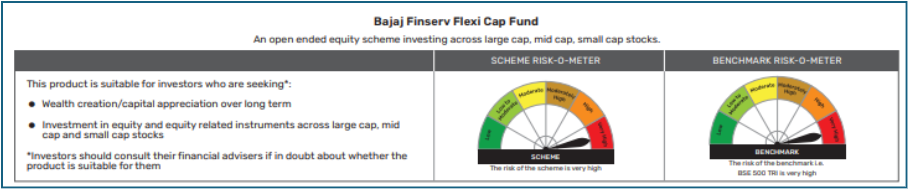
Mutual Fund investments are subject to market risks, read all scheme related documents carefully.
This document should not be treated as endorsement of the views/opinions or as investment advice. This document should not be construed as a research report or a recommendation to buy or sell any security. This document is for information purpose only and should not be construed as a promise on minimum returns or safeguard of capital. This document alone is not sufficient and should not be used for the development or implementation of an investment strategy. The recipient should note and understand that the information provided above may not contain all the material aspects relevant for making an investment decision. Investors are advised to consult their own investment advisor before making any investment decision in light of their risk appetite, investment goals and horizon. This information is subject to change without any prior notice.
The content herein has been prepared on the basis of publicly available information believed to be reliable. However, Bajaj Asset Management Limited (formerly known as Bajaj Finserv Asset Management Limited) does not guarantee the accuracy of such information, assure its completeness or warrant such information will not be changed. The tax information (if any) in this article is based on prevailing laws at the time of publishing the article and is subject to change. Please consult a tax professional or refer to the latest regulations for up-to-date information.


































