
The FIRE meaning comes from its full form, Financial Independence, Retire Early. The FIRE movement encourages you to build savings and investments that can support life without a salary. Here’s how it works and what your expenses, goals and circumstances mean for your plans to step away from full-time work.
Table of Contents
FIRE meaning: What is the FIRE movement?
FIRE stands for Financial Independence, Retire Early. It describes an approach to saving, spending and investing that aims to reduce your reliance on employment income and make early retirement possible.
Financial independence and early retirement are related, but they are not the same milestone. You become financially independent when your financial resources can support your needs without requiring a salary. You retire early when you choose to stop regular work sooner than you otherwise would.
Key Takeaways
- FIRE stands for Financial Independence, Retire Early, and involves building financial resources to support life without depending on a salary.
- Your retirement target should reflect future expenses, family commitments, taxes and how many years you expect your money to last.
- Multiplying annual expenses by 25 gives an illustrative target at a 4% initial withdrawal rate but does not establish that the amount is sufficient.
- Different FIRE approaches accommodate different lifestyles, savings targets and plans to continue working.
- Planning for early retirement involves both building investments and deciding how to use them over time.
For example, you might have enough money to meet your expenses but continue working because you enjoy your profession. You could also move to a role with fewer hours or spend more time on a personal project.
FIRE is a planning approach, not a financial product or an assurance that you can retire by a particular age.
How does FIRE work?
A FIRE plan starts by estimating the lifestyle you want to fund. You then assess the gap between the investments you already have and the amount you may need.
Your savings rate shows how much of your income you are setting aside:
Savings rate = Amount saved and invested / Take-home income x 100
Suppose your monthly take-home income is ₹80,000 and you save and invest ₹20,000. Your savings rate is 25%.
Increasing this amount can help you contribute more towards your goal. That could come from reducing expenses you no longer value, increasing your income or directing part of a salary increase towards investments.
There is no compulsory savings percentage. A workable amount depends on your household expenses, dependants, debt and other goals.
The figures shown are for illustrative purpose only
How to calculate your FIRE number
Your FIRE number is the pool of investments you estimate you will need when you stop depending on regular employment income. Start with the annual amount your investments will need to provide. This may differ from your total expenses if you also expect other income, such as a pension.
A commonly used starting calculation is:
Illustrative FIRE number = Annual amount required from investments / Assumed initial withdrawal rate
At an assumed initial withdrawal rate of 4%, the calculation is equivalent to multiplying that annual amount by 25.
However, the formula alone does not account for everything that affects retirement. You still need to assess the retirement period, investment returns, inflation, taxes and changes in spending.
Calculate expenses for the year you plan to retire
Suppose your current expenses are ₹50,000 a month, or ₹6 lakh a year, and you plan to retire in 10 years.
Assuming expenses increase by 6% annually and your lifestyle remains unchanged:
Estimated annual expenses after 10 years = ₹6,00,000 x (1.06)¹⁰
That comes to approximately ₹10.75 lakh a year.
Applying different initial withdrawal assumptions gives these starting estimates:
| Assumed initial withdrawal rate | Calculation | Illustrative target |
| 4% | Estimated annual expenses / 0.04 | ₹2.69 crore |
| 3.50% | Estimated annual expenses / 0.035 | ₹3.07 crore |
| 3% | Estimated annual expenses / 0.03 | ₹3.58 crore |
The table shows how changing one assumption changes the target. It does not establish which withdrawal rate would be suitable for you.
These estimates assume investments fund all regular expenses. Withdrawal-related taxes, separate goals and additional reserves would need to be considered.
Figures are illustrative and rounded; the inflation and withdrawal rates are assumptions, not forecasts or recommendations.
Understand the 4% withdrawal rule
Under the commonly discussed 4% rule, the first year’s withdrawal is 4% of the portfolio’s value at retirement. Later withdrawals adjust that initial amount for inflation.
For example, 4% of ₹2 crore is ₹8 lakh. If inflation over the following year is assumed to be 6%, the next annual withdrawal would be ₹8.48 lakh.
This differs from taking 4% of the portfolio’s changing value each year.
The calculation does not prove that your savings will last throughout retirement. That depends on how your investments perform, how much you withdraw and how long you need the money.
The figures shown are for illustrative purpose only
What are the different types of FIRE?
These labels describe different approaches within FIRE discussions. They are not regulated investment categories or plans with fixed eligibility requirements.
| Approach | What you are working towards |
| Traditional FIRE | Enough investments to support your planned retirement lifestyle without employment income. |
| Lean FIRE | A retirement budget built around relatively low spending and a modest lifestyle. |
| Fat FIRE | A larger retirement budget that allows for higher discretionary spending. |
| Barista FIRE | A combination of investment withdrawals and continued earnings from part-time work or similar activities. |
| Coast FIRE | An existing investment amount projected to reach a future retirement target while you continue earning enough to meet current expenses. |
For Coast FIRE, the projection depends on future investment growth. Reaching that starting amount does not mean your later retirement is assured or that reviews can stop.
How to plan for the FIRE movement in India
Planning for FIRE starts with understanding what your life would cost without a regular salary. Here’s how to build a plan around your needs:
1. Work out what retirement would cost you
Review a full year of expenses so you capture more than monthly bills. Include insurance premiums, home maintenance, travel and other occasional spending.
Then consider what could change. Commuting expenses might fall, while spending on hobbies could increase. Rent, family support or loan repayments may continue.
Keep large goals, such as a child’s education, separate from everyday retirement spending. Otherwise, the same money can end up being counted towards two needs.
2. Allow for a longer retirement
If you stop working at 40 and plan until age 90, you are planning for 50 years of expenses.
That is why the retirement period matters alongside the target amount. Your estimate should account for inflation during retirement and the money available after relevant taxes and investment costs.
SEBI’s retirement-planning calculator includes inputs for retirement age, years in retirement, inflation and post-tax returns, reflecting how these factors work together.
Source: SEBI Investor, Financial Goal Planner with Variable Asset Allocation.
3. Review debt, emergency savings and insurance
Account for any EMIs that will continue after you stop working. A retirement budget should show how those payments will be funded.
Keep accessible savings for unexpected expenses, and review whether your health cover will continue if you leave your job. If others depend on your earnings, life insurance needs should also form part of the assessment.
These decisions help establish how much of your investment pool is available for retirement spending.
4. Give each investment a purpose
Consider when you expect to use the money before deciding how to invest it. Near-term expenses and spending several decades away have different requirements.
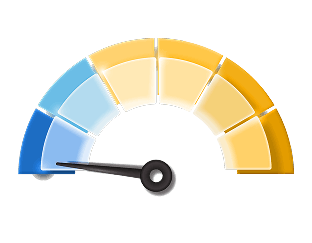
Review the investment’s risks, costs and access conditions. For mutual funds, the scheme’s Riskometer helps you understand its stated risk level, while the scheme documents explain its objective and investment approach.
An SIP can help you invest regularly, but the results depend on the underlying scheme. Regular contributions do not remove investment risk.
Source: SEBI Investor, Understanding the Riskometer.
5. Check what money you can actually use
Your total wealth and your available retirement investments may be different amounts.
For example, a home you intend to keep living in does not automatically provide money for groceries or electricity bills. Similarly, an investment with withdrawal restrictions may not be available when an expense falls due.
List when you can access each investment and what charges or conditions apply. This helps you plan the years between leaving work and receiving any later retirement benefits.
6. Decide how withdrawals will work
Building a retirement corpus is one part of the task. The next is deciding how much to withdraw and which investments to draw from.
Investment returns do not arrive evenly each year. If you sell investments after their value falls, you may need to sell more units to fund the same expense, leaving fewer units invested for a recovery.
This is known as sequence-of-returns risk: the order in which returns occur matters when you are withdrawing money.
Review essential and optional spending separately so you know where adjustments would be possible.
7. Revisit the plan as your life changes
Compare actual expenses and investments with your estimates each year. Update the plan after a change in income, family responsibilities or retirement expectations.
For anyone considering the FIRE movement in India, the retirement date should follow this assessment. A target chosen several years ago may need to change as your circumstances become clearer.
Benefits and limitations of FIRE
FIRE can offer more choice over your future, but it also involves trade-offs worth considering:
Benefits of FIRE
Working towards FIRE can help you bring more purpose to your everyday money decisions:
- Greater flexibility: Building financial resources can give you more choice over your working hours and career decisions.
- Clearer spending decisions: A defined goal helps you decide what you want to spend on now and what you want to save for.
- More structured planning: Tracking expenses, investments and future needs gives your retirement goal a measurable basis.
Limitations of FIRE
Your plan needs room for commitments and changes that could affect your progress:
- Competing priorities: Saving a large amount may be difficult alongside housing costs, family support and other goals.
- Changing expenses: Your retirement budget may need revisions as your lifestyle and responsibilities change.
- Uncertain investment outcomes: Actual returns can differ from the assumptions used to calculate your target.
- Ongoing management: Reaching a savings milestone does not end the need to review investments and withdrawals.
Source: SEBI and NISM, Financial Education for Executives Nearing Retirement.
Is FIRE suitable for you?
Think about what you want your savings to make possible. It could be leaving full-time employment, working fewer days or having enough financial room to change careers.
Discuss those expectations with anyone who shares your finances. Your plan needs to accommodate both current responsibilities and the lifestyle you hope to have later.
You can adopt useful FIRE habits without committing to an early retirement date. Keeping track of spending and investing towards clearly defined goals can support your financial planning even if you choose to keep working.
Conclusion
Understanding the FIRE meaning is a starting point for deciding what financial independence would look like for you. Put the FIRE movement into perspective by reviewing your expenses, commitments and available savings. Then shape a retirement plan you can review and adjust as your needs and priorities change over time.
FAQs
How much money do I need to retire early in India?
The amount depends on your retirement-year expenses, other income, family commitments and retirement period. Inflation, taxes and investment uncertainty also need to be included in the assessment.
Does saving 25 times my annual expenses mean I can retire?
Not automatically. That amount corresponds to a 4% initial withdrawal calculation, but it does not establish whether your investments can support your spending throughout retirement.
Do I need to take high investment risk to achieve FIRE?
Taking more risk does not assure an earlier retirement. Your contributions, spending expectations and retirement date are also factors you can review when assessing the plan.
Can someone with a modest income follow FIRE?
They can use its budgeting and investing principles, although early retirement may be difficult where essential expenses leave little to save. The timeline depends on individual circumstances.
Is financial independence the same as early retirement?
No. Financial independence means you can support your needs without relying on employment income. Early retirement is a decision to stop regular work, which may or may not follow.
How is Coast FIRE different from Barista FIRE?
Coast FIRE generally relies on earnings for current expenses while investments remain invested for later retirement. Barista FIRE combines continued earnings with withdrawals from investments.