Moat investing
This strategic approach involves identifying and investing in companies with economic moats, or sustainable competitive advantages.
Read More
To generate long-term capital appreciation by investing in a diversified portfolio of equity and equity related securities, predominantly in large and mid-cap stocks from various sectors. The fund manager may also seek participation in other equity and equity related securities.
However, there is no assurance that the investment objective of the scheme will be achieved.
The Bajaj Finserv Large and Mid Cap Fund invests predominantly in large and mid cap stocks from various sectors, seeking to balance the growth potential of mid caps with the relative stability of large caps.
The scheme follows a MOAT investment strategy, which involves focusing on companies with strong economic moats. In financial terms, a ‘moat’ refers to a sustainable competitive advantage that may help a company maintain its market position over an extended period. These advantages—such as strong brands, cost leadership, network effects, or high switching costs—may help a business stay relatively resilient amid competition and create long-term growth potential. Apart from this, Bajaj Finserv Asset Management Limited also follows its inhouse INQUBE philosophy framework which combines the information edge, quantitative edge and behavioural edge, integrating superior information gathering with sophisticated analysis and insights from behavioural finance.
Moat investing
This strategic approach involves identifying and investing in companies with economic moats, or sustainable competitive advantages.
Read MoreDiversified portfolio
The fund is structured to navigate both large and mid-cap segments, offering investors exposure to a wide spectrum of companies.
Read MoreINQUBE philosophy
Our inhouse INQUBE investment philosophy brings informational, quantitative & behavioural edge to the portfolio.
Read More
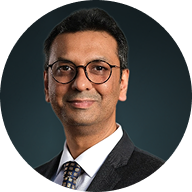
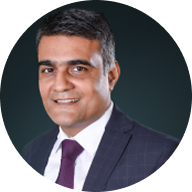
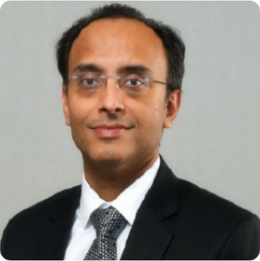
Nimesh Chandan has over 24 years of experience in the Indian Capital Markets. He has spent 18 years in Fund Management- managing and advising domestic and international investors, retail as well as institutional. Prior to joining Bajaj Finserv Asset Management Ltd., he has worked with Canara Robeco Asset Management as Head of Investments, Equities (Domestic and Offshore). He has also worked with other asset management companies including Birla Sunlife Asset Management, SBI Asset Management and ICICI Prudential Asset Management.
Sorbh Gupta has over 16 years of experience in the Indian Capital Markets. In November 2022, he was appointed as Head – Equity at Bajaj Finserv Asset Management Limited. Prior to joining Bajaj Finserv Asset Management Limited, he was associated with Quantum Asset Management Company Private Ltd. He has also worked with other financial companies such as Siddhesh Capital Markets Pvt. Ltd. and Pranav Securities Pvt. Ltd.
Siddharth Chaudhary joined the Company in July 2022 as a Senior Fund Manager – Fixed Income. Prior to this, he was associated with Sundaram Asset Management Co. Ltd from April 2019 - July 2022 as Head Fixed Income – Institutional Business. From April 2017 – March 2019, he served as a Head – Fixed Income, and from August 2010 – March 2017 as a Fund Manager – Fixed Income with Sundaram Asset Management Co. Ltd. During June 2006 – September 2010, he was working as Senior Manager, Treasury Dept in Indian Bank.
| Instruments | Indicative allocations (% of total assets) | |
|---|---|---|
| Minimum | Maximum | |
| Equity and equity related instruments of large cap companies | 35% | 65% |
| Equity and equity related instruments of mid cap companies | 35% | 65% |
| Equity and equity related instruments other than large and mid cap companies | 0% | 30% |
| Debt instruments and money market instruments* and units of mutual fund schemes | 0% | 30% |
| Units issued by REITs and InvITs | 0% | 10% |
*Money market instruments will include commercial papers, commercial bills, Triparty REPO, Reverse Repo and equivalent and any other like instruments as specified by SEBI and Reserve Bank of India from time to time.
For information please refer to the Scheme Information Document.
Bajaj Finserv Large and Mid Cap Fund:
An open ended equity scheme investing in both large cap and mid cap stocks
Fresh subscription – Rs. 500/- and in multiples of Re. 1/-
Systematic Investment Plan (SIP):
Rs. 500 and above: Minimum 6 instalments.
| Tenors | Current value of ₹10,000 Invested | CAGR | ||||
|---|---|---|---|---|---|---|
| Since Inception 27 Feb '24 |
1Y | 3Y | Since Inception 27 Feb '24 |
1Y | 3Y | |
| Bajaj Finserv Large and Midcap Fund | ₹12,235 | ₹11,547 | — | 10.60% | 15.47% | — |
| Nifty Large Midcap 250 TRI | ₹11,958 | ₹12,012 | — | 9.34% | 20.12% | — |
| Nifty 50 TRI | ₹11,612 | ₹11,507 | — | 7.75% | 15.07% | — |
Disclaimer: Past performance may or may not be sustained in future.
Different Plans i.e. Regular Plan and Direct Plan under the scheme have different expense structure. Performance is provided for Regular Plan – Growth Option. Benchmark: Nifty Large Midcap 250 TRI, Additional Benchmark: Nifty 50 TRI. Inception Date: 27th February 2024th Period for which scheme’s performance has been provided is computed basis last day of the previous month preceding the date of this material. Returns less than 1 year period are simple annualized and greater than 1 year are compounded annualized.
Not applicable
For each purchase of units through Lumpsum / switch-in / Systematic Investment Plan (SIP) and Systematic Transfer Plan (STP), exit load will be as follows:
The Scheme will have a common portfolio across various Plans/Options/Sub-options.
Investors are requested to note that Growth and IDCW Option (Payout, Reinvestment and Transfer) under Regular and Direct Plans will have different NAVs. These NAVs will be separately declared.
to view Total Expense Ratio
A Large and Mid Cap Fund invests in a mix of large cap and mid cap companies, as defined by SEBI. By combining established businesses with emerging companies, these funds aim to balance relative stability and long-term growth potential. Such funds may suit investors seeking diversified equity exposure across market capitalisations, with an investment horizon aligned to long-term wealth creation goals.
As per SEBI guidelines, Large and Mid Cap Funds must invest at least 35% of their assets in large-cap companies (those ranked between 1 to 100 by market capitalization on recognised stock exchanges) and at least 35% in mid-cap companies (ranked 101 to 250 by market capitalization). The rest of the portfolio can be flexibly invested in securities or instruments based on the fund manager’s strategy and regulatory norms. Fund managers actively manage these portfolios to potentially optimise performance and balance risk with return potential based on market trends and research.
You can invest in Bajaj Finserv Large and Mid Cap Fund both online and offline.
Offline mode – This method usually entails filling out an application form and submitting it to the mutual fund company’s official point of acceptance or OPAT.
If you’re investing through a distributor, they will provide the form to you, help you fill it, and submit it on your behalf.
Online mode – You can follow these steps:
You may consider investing in a Large and Mid Cap Fund if:
Capital gains and IDCW from a Large and Mid Cap Mutual Fund are taxed at the following rate:
| ELSS Tax Saver Fund | Healthcare Fund | Multi Cap Fund |
|---|---|---|
| Flexi Cap Fund | Small Cap Fund | Large Cap Fund |
| Consumption Fund | Banking and Financial Services Fund |
| Equity Funds | Debt Funds | Hybrid Funds | Index Funds |
|---|---|---|---|
| Exchange Traded Fund Funds | Savings+ | All Mutual Funds |
You can invest in Bajaj Finserv Large and Mid Cap Fund either online or offline. Offline mode: You can invest by meeting distributors or brokers in person. Online Mode: You can invest through your Demat and online trading account. You can also go to Bajaj Finserv AMC’s investor portal and create an online account to invest. Click here to invest now.
Investing in large and mid cap funds offers several potential advantages. These funds aim to combine the relative stability of large cap companies with the growth potential of mid cap companies within a single fund.
The allocation between large cap and mid cap companies within the large and mid cap funds category is determined by the fund manager and is subject to minimum 35% of total assets in both large cap stocks and mid cap stocks. Investors cannot directly customize this allocation.
Investors seeking long-term growth and capital appreciation can consider investing in Bajaj Finserv Large and Mid Cap Fund owing to its diversified portfolio, high active share, and commitment to a low turnover portfolio.
Yes, you can invest in Bajaj Finserv Large and Mid Cap Fund through both SIP and lumpsum mode. To calculate your SIP or lumpsum amount, you can make use of an SIP calculator or a lumpsum calculator respectively.
Diversification: The fund balances stability and growth by investing across large and mid cap segments, spreading risk across sectors and market sizes.
Growth-oriented: Emphasizes growth potential from mid caps and stability from large caps with economic moats, aiming for sustained growth.
High active share: Deviates from index-hugging strategies to make independent investment decisions, potentially outperforming by reacting dynamically to market changes.
Low turnover portfolio: Minimizes transaction costs and potential tax implications for by holding stocks for the long term, focusing on companies with enduring competitive advantages and growth potential.
Large and mid cap funds invest in a mix of large cap and mid cap companies to balance relative stability with long-term growth potential.
Yes. Long-term gains (after 12 months) are taxed at 12.5% above ₹1.25 lakh, and short-term gains (within 12 months) at 20%. IDCW payments (earlier called dividends) are taxed as per the investor’s income slab. Note: These are base rates excluding cess and applicable surcharge.
A large and mid cap fund invests in both large cap and mid cap stocks, while large cap funds focus only on large, well-established companies and multi cap funds invest across all market caps.
Yes, switches within the same AMC are allowed; transfers to a different AMC require redemption from the current fund and a fresh investment in the new fund, subject to taxes and applicable loads.
The minimum investment amount for the Bajaj Finserv Large and Mid Cap Fund is Rs. 500 for lumpsum as well as SIP (minimum six instalments for SIP). It is recommended that investors check scheme-related documents for up-to-date information.
Large and mid cap funds are generally suited for a long investment horizon. The exact time frame depends on market conditions and individual goals.
An exit load may be levied if units are redeemed in less than six months. For details about the exit load amount and conditions, check the ‘Load Structure/Lock-In Period’ section on this page.
These funds invest predominantly in equities, including mid cap stocks, which tend to be more volatile. So, they may not suit conservative investors. Investors may check their risk appetite before investing.
Units can generally be redeemed partially or fully, subject to scheme terms. Exit load and taxes may apply at the time of redemption.
Details about the fund managers can be found on this page and the Scheme Information Document.
The NAV is calculated the end of every business day. The latest NAV can be viewed at the top of this page and on the AMFI website.
Call, chat or write to us if you
need investment help
Toll-free number
Write to us at
Investor WhatsApp channel
Share your details and our experts will guide you.
By submitting, I agree to receive a call from
Bajaj Finserv AMC for assistance.
Need help planning your investments?
Our Investment Philosophy reflects what we, as an organisation, believe will generate a good return on equity investment for our investors in the long term. It dictates our goals and guides decision making.
Alpha (a) is a term used in investing to describe an investment strategy’s ability to beat the market.
Alpha is thus also often referred to as excess return or the abnormal rate of return in relation to a benchmark, when adjusted for risk. Essentially, it means doing better than the crowd without taking disproportionate risk.

Collecting superior information
Analysts and portfolio managers strive to collect superior information about the business and the management of the company. They try to generate superior earnings forecast and the balance strength of the company and the industry, thereby trying to 'beat the market' on information edge. This is an important source of alpha for an investor. However, over the years, retaining the information edge has become more difficult and expensive. With a whole lot of investors trying to collect superior information, how can an investor be sure to continuously have accurate and material information about the companies, ahead of others, all the time?

Processing information better
Even if you don't have material information earlier than the crowd, you can still generate better outcomes if you are able to process this information better. Investors develop models and algorithms with enhanced predictive powers to forecast the next move. Fund managers who invest based on some pure formal analytical models are quantitative managers. Here, the goal is to try and beat other investors based on the sophistication of procedures or analytics. The analytical edge can be quite useful until it gets copied by many, and then it may stop generating superior returns.

Exploiting behavioural biases
As the name suggests, this edge is achieved by superior behaviour in reacting to the inputs available to maximise alpha. Modern finance assumes people behave with extreme rationality. However, researchers in behavioural finance have shown that this is not true. Moreover, these deviations from rationality are often systematic. Behavioural managers try to exploit situations where securities are mispriced by the market because of behavioural factors. At Bajaj Finserv AMC, we endeavour to combine the best of these edges.