 NFO
 3 Years
INQUBE investment approach
Combines information, quantitative analysis and behavioural insights to guide investment decisions.
Read MoreBAJAJ ASSET MANAGEMENT LIMITED.
NFO opening in
Min SIP amount
₹ 500
Ideal holding period
10 Years+

 Megatrend InvestingIINQUBE Investment ApproachBBusiness Cycle InvestingAActive Sector Allocation

Who may consider this fund?
This fund may suit long-term investors seeking equity exposure through a business cycle approach. You should be comfortable with sharp fluctuations in value and concentrated exposure to selected companies or sectors.
Fund details card
| NFO opens | NFO closes | Benchmark | Min. SIP amount |
| 20-Nov-26 | 04-Dec-26 | BSE 500 TRI | ₹500 and above |
The objective of the Scheme is to generate long term capital appreciation by investing in equity and equity related securities of companies with a focus on riding business cycles through allocation between various sectors and stocks at different stages of business cycles.
However, there is no assurance that the investment objective of the Scheme will be achieved.
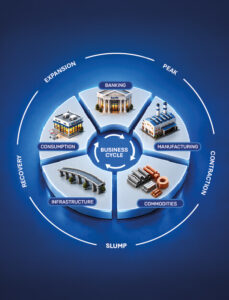
Different businesses respond differently to changes in the economy. Rising demand may support some industries, while changes in borrowing costs or commodity prices may affect others. Bajaj Finserv Business Cycle Fund will study these shifts to guide where it invests. The fund’s approach considers several interconnected cycles:
The investment team will combine this broader view with research into individual companies, their management and valuations. It can adjust sector and stock allocations as conditions change, investing across large cap, mid cap and small cap companies.
This process follows the INQUBE investment philosophy, bringing together Information Edge, Quantitative Edge and Behavioural Edge to inform investment decisions.
INQUBE investment approach
Combines information, quantitative analysis and behavioural insights to guide investment decisions.
Read MoreFlexible portfolio allocation
Adjusts investments across sectors, company sizes and investment styles as business conditions change.
Read MoreSector and industry opportunities
Looks for sectors and industries entering a favourable phase of the business cycle.
Read More
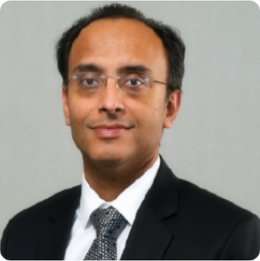

Sorbh Gupta has over 20 years of experience in the Indian Capital Markets. In November 2022, he was appointed as Head – Equity at Bajaj Finserv Asset Management Limited. Prior to joining Bajaj Finserv Asset Management Limited, he was associated with Quantum Asset Management Company Private Ltd. He has also worked with other financial companies such as Siddhesh Capital Markets Pvt. Ltd. and Pranav Securities Pvt. Ltd.
Siddharth Chaudhary joined the Company in July 2022 as a Senior Fund Manager – Fixed Income. Prior to this, he was associated with Sundaram Asset Management Co. Ltd from April 2019 - July 2022 as Head Fixed Income – Institutional Business. From April 2017 – March 2019, he served as a Head – Fixed Income, and from August 2010 – March 2017 as a Fund Manager – Fixed Income with Sundaram Asset Management Co. Ltd. During June 2006 – September 2010, he was working as Senior Manager, Treasury Dept in Indian Bank.
Mr. Bharat Hegde joined the Company in July 2024 as a Senior Research Analyst - Megatrends and has been actively engaged in tracking and identifying domestic and global megatrends. In addition, he is engaged in ideation, and in-depth company and sector research for equity funds on multiple sectors such as IT, Defence, Power, Capital goods and electric Utilities.
Upon his appointment as Fund Manager and Key Personnel, he will assume responsibility for the management of allocated funds, while continuing his focus on sectoral and company-level research.
Prior to joining the Company, he was associated with Bharti AXA Life Insurance Company Limited, Motilal Oswal Financial Services Limited, SBICAP Securities Limited, and CRISIL Global Research & Analytics.
He brings over 14 years of experience, with over 10 years of experience in equity research, including stock recommendations for equity funds, conducting company and sector analysis, assisting in fundamental research on coverage companies, building and maintaining financial models, and preparing detailed research reports.
| Instruments | Indicative allocations (% of total assets) | |
| Minimum | Maximum | |
| Equity and Equity related^ instruments of companies selected on the basis of business cycle | 80% | 100% |
| Equity and equity related instruments of companies other than above | 0% | 20% |
| Money market instruments*, other liquid instruments#, Units of InvITs**, Units of Gold ETFs and Silver ETFs and units of Liquid, Overnight and Money Market Mutual Fund | 0% | 20% |
Type of scheme
An open ended equity scheme investing in business cycles based theme.
During NFO
During ongoing offer
NIL
For each purchase of units through Lumpsum / switch-in / Systematic Investment Plan (SIP) and Systematic Transfer Plan (STP), exit load will be as follows:
The load on other types of transaction could be Income Distribution cum Capital Withdrawal reinvestment, Switch in/out, SIP/SWP/STP (as applicable).
Lock-In Period
None.
Default option: Growth.
Default IDCW sub-option: Reinvestment of IDCW.
to view Total Expense Ratio
This product is suitable for investors who are seeking*:
*Investors should consult their financial advisers if in doubt about whether the product is suitable for them
#The above product labelling assigned during the New Fund Offer (NFO) is based on internal assessment of the Scheme Characteristics or model portfolio and the same may vary post NFO when the actual investments are made.
Bajaj Finserv Business Cycle Fund is an open-ended equity scheme that seeks long-term capital appreciation. It will invest at least 80% of its total assets in equity and equity related instruments of companies selected on the basis of business cycles.
The investment team will study economic growth, credit availability, consumption, commodity prices and interest rates, then assess individual companies, their management and valuations to select stocks.
The portfolio can include large cap, mid cap and small cap companies. Investment decisions will follow the INQUBE philosophy, combining Information Edge, Quantitative Edge and Behavioural Edge.
The fund’s approach offers the following features:
Before investing in Bajaj Finserv Business Cycle Fund, consider these key factors:
Both plans of Bajaj Finserv Business Cycle Fund follow the same strategy and share a common portfolio. They differ in how you invest and the expenses charged.
| Aspect | Direct Plan | Regular Plan |
| Investment route | Invest directly with Bajaj Finserv Mutual Fund, without a distributor | Invest through a mutual fund distributor |
| Distribution expenses | Excludes distributor commissions and distribution expenses | Includes applicable distributor commissions and distribution expenses |
| Expense ratio | Lower than the Regular Plan | Higher than the Direct Plan because of distribution expenses |
| NAV | Declared separately for the applicable option | Declared separately for the applicable option |
Both plans offer Growth and Income Distribution cum Capital Withdrawal (IDCW) options, with payout, reinvestment and transfer sub-options under IDCW. Differences in expenses affect the plans’ respective NAVs and returns.
For resident individual investors, capital gains are taxed according to how long the units are held, while IDCW distributions are taxed at the applicable income-tax slab rate:
| Type of income | Tax treatment |
| Short-term capital gains on units held for 12 months or less | 20% |
| Long-term capital gains on units held for more than 12 months | 12.5% on aggregate qualifying long-term capital gains exceeding ₹1.25 lakh in a tax year, without indexation |
| IDCW distributions | Taxed at the investor’s applicable income-tax slab rate |
Applicable surcharge and 4% health and education cess are additional. The ₹1.25 lakh threshold applies across qualifying long-term capital gains covered by the relevant provision, rather than separately to each fund.
For resident investors, 10% TDS applies when IDCW income exceeds ₹10,000 in a tax year, subject to applicable conditions. TDS is tax withheld from the payment; your final tax liability depends on your circumstances.
Non-resident investors are subject to separate withholding provisions and may need to consider applicable tax treaty provisions.
The tax information in this article is based on prevailing laws at the time of publishing the article and is subject to change. Please consult a tax professional or refer to the latest regulations for up-to-date information.
The Bajaj Finserv Business Cycle Fund 2026 NFO opens on 20 November 2026 and closes on 4 December 2026. Here is how you can apply:
Units are offered at ₹10 per unit during the NFO. The scheme will reopen for continuous sale and repurchase within five business days of allotment, after which purchases will take place at the applicable NAV.



The Bajaj Finserv Business Cycle Fund NFO opens on 20 November 2026 and closes on 4 December 2026.
Yes. The scheme will reopen for purchases and redemptions within five business days of allotment. Investments after reopening will be made at the applicable NAV, rather than the ₹10 NFO offer price.
The minimum lumpsum investment is ₹500, with additional amounts in multiples of ₹1. For an SIP, each instalment must be ₹500 or more, with a minimum of six instalments.
There is no daily NAV during the NFO. Units are offered at ₹10 per unit. The first NAV will be calculated and disclosed within five business days of allotment.
No AUM figure is available at the NFO stage. Once the scheme begins operations, its AUM will reflect the value of the assets it manages.
Units will be allotted within five business days of the NFO closing, provided your application is complete, accepted and the investment payment has been realised.
No. You can hold your units in account statement form without a demat account. To hold units in demat form, provide your depository participant’s name, DP ID and beneficiary account number in the application.
Yes. NRIs can invest on a repatriation basis, allowing funds to be transferred abroad, or a non-repatriation basis, subject to the applicable documentation and eligibility conditions. Canadian residents are not eligible. U.S. Persons are generally not eligible, except for NRI/PIO investors who are physically present in India when investing and submit a physical transaction request with the documents prescribed by Bajaj AMC, subject to applicable laws and AMC conditions.
Redemption proceeds will be dispatched within three working days of receiving a valid redemption request at an authorised centre. You can request redemption once the scheme reopens after allotment.
No regular income is assured under the IDCW option. Payments depend on available distributable surplus and Trustee approval; neither their amount nor frequency is guaranteed. A distribution reduces the scheme’s NAV and is not an additional return on top of it.
Once the scheme begins investing, its portfolio as at each month-end will be disclosed within 10 days of that month ending. The disclosure will be available on the Bajaj AMC and AMFI websites.












Call, chat or write to us if you
need investment help

Toll-free number
Write to us at
Investor WhatsApp channel
Share your details and our experts will guide you.

By submitting my details, I agree to receive a call from
Bajaj AMC for assistance.

Need help planning your investments?

Our Investment Philosophy reflects what we, as an organisation, believe will generate a good return on equity investment for our investors in the long term. It dictates our goals and guides decision making.
Alpha (a) is a term used in investing to describe an investment strategy’s ability to beat the market.
Alpha is thus also often referred to as excess return or the abnormal rate of return in relation to a benchmark, when adjusted for risk. Essentially, it means doing better than the crowd without taking disproportionate risk.

Collecting superior information
Analysts and portfolio managers strive to collect superior information about the business and the management of the company. They try to generate superior earnings forecast and the balance strength of the company and the industry, thereby trying to 'beat the market' on information edge. This is an important source of alpha for an investor. However, over the years, retaining the information edge has become more difficult and expensive. With a whole lot of investors trying to collect superior information, how can an investor be sure to continuously have accurate and material information about the companies, ahead of others, all the time?

Processing information better
Even if you don't have material information earlier than the crowd, you can still generate better outcomes if you are able to process this information better. Investors develop models and algorithms with enhanced predictive powers to forecast the next move. Fund managers who invest based on some pure formal analytical models are quantitative managers. Here, the goal is to try and beat other investors based on the sophistication of procedures or analytics. The analytical edge can be quite useful until it gets copied by many, and then it may stop generating superior returns.

Exploiting behavioural biases
As the name suggests, this edge is achieved by superior behaviour in reacting to the inputs available to maximise alpha. Modern finance assumes people behave with extreme rationality. However, researchers in behavioural finance have shown that this is not true. Moreover, these deviations from rationality are often systematic. Behavioural managers try to exploit situations where securities are mispriced by the market because of behavioural factors. At Bajaj AMC, we endeavour to combine the best of these edges.