An emergency fund needs to be accessible when an unexpected expense or temporary loss of income arises. If you are deciding where to keep emergency fund money, consider how soon you may need it and how each option works. This guide compares emergency fund investment options available in India.
Table of Contents
What is an emergency fund?
An emergency fund is money set aside for expenses that are necessary, unexpected and difficult to postpone. Examples include urgent medical costs, essential home repairs or a temporary loss of income.
It is different from money saved for a holiday, vehicle or another planned purchase. Those expenses usually have an expected date, while an emergency may arise without notice. SEBI’s investor-education material identifies an emergency fund as a way to prepare for unexpected expenses and financial setbacks.
Source: SEBI Investor, Management of Income and Expenses.
Key Takeaways
- An emergency fund should balance accessibility, capital stability and the opportunity to earn returns on money that may remain unused.
- Savings accounts, fixed deposits, liquid funds and overnight funds can serve different parts of an emergency reserve.
- A layered approach can keep some money immediately accessible while allowing the remaining amount to be invested according to its expected withdrawal timeline.
- Liquid and overnight funds offer relatively high liquidity while investing in short-term debt and money market instruments.
- The emergency fund should be reviewed after a withdrawal or a change in expenses, income or family responsibilities.
Where should you keep your emergency fund?
Your emergency fund can be divided across options based on how quickly each part may be required. Money for immediate expenses may be kept in a savings account, while the amount that is unlikely to be required on the same day can be considered for liquid funds, overnight funds, or fixed deposits.
This approach allows different products to serve different purposes. The right mix will depend on your household expenses, income stability, family responsibilities and preferred level of accessibility.
What to consider when choosing an emergency fund option
Before deciding where to invest emergency fund savings, compare each option on the features that matter during an unexpected expense:
- Accessibility: Check how quickly the money can reach your bank account, including on weekends and public holidays.
- Capital stability: Understand how the value of the money is expected to behave during the period for which it is invested.
- Withdrawal process: Review premature-withdrawal terms, exit loads, minimum balances, redemption limits and cut-off timings.
- Convenience: Consider how easily you can access the money through internet banking, an investment platform or another available channel.
- Investment horizon: Match each option with the period for which that portion of the emergency fund may remain unused.
- Return opportunity: Compare the returns available after considering accessibility, costs and the product’s suitability for your needs.
Best places to keep your emergency fund in India
The main emergency fund investment options offer different combinations of access, stability and return opportunity. They can be considered individually or used together as part of a layered arrangement:
Liquid fund
A liquid fund is a type of debt fund that invests in debt and money market securities with maturities of up to 91 days. The short maturity of the underlying securities helps maintain relatively high liquidity and lower interest-rate risk than longer-duration debt funds.
Liquid funds can be considered for the portion of an emergency reserve that may remain unused for a short period. Returns are market-linked, and redemption takes place at the applicable net asset value. Some schemes also offer an Instant Access Facility, subject to the applicable terms.
Savings account
A savings account provides convenient access through UPI, debit cards, internet banking and bank branches. It can be used for the portion of your emergency fund that may be required immediately.
Keeping this money in a separate savings account can also make it easier to track and reduce its use for ordinary purchases.
Eligible bank deposits, including savings and fixed deposits, are insured by the Deposit Insurance and Credit Guarantee Corporation up to ₹5 lakh per depositor per bank, including principal and interest, when held in the same right and capacity. Deposits across different branches of the same bank are combined for this limit.
Source: DICGC, Deposit Insurance Information Leaflet 2024–25, data as on 31 March 2025.
Overnight fund
An overnight fund invests in securities with a maturity of one day. The portfolio is renewed as the securities mature, giving the category a very short investment horizon and relatively low exposure to interest-rate movements.
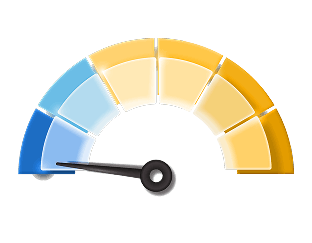
An overnight fund may be considered for part of an emergency reserve where high liquidity and a short investment horizon are priorities. Review the scheme’s Riskometer, portfolio and redemption facility before investing.
Source: SEBI, Master Circular for Mutual Funds, 20 March 2026.
Sweep-in fixed deposit
A sweep-in facility connects a savings account with a fixed deposit. Money above a specified balance may move into a fixed deposit, while the required amount can be transferred back when the balance in the savings account is insufficient.
This can combine the accessibility of a savings account with the interest rate offered on a fixed deposit. The minimum balance, deposit tenure and withdrawal process vary across banks, so these terms should be checked before choosing the facility.
Regular fixed deposit
A fixed deposit can be considered for the portion of an emergency fund that is unlikely to be required immediately. It offers a stated interest rate for the selected tenure and generally permits premature withdrawal under the bank’s applicable terms.
You can also divide the amount across fixed deposits with different maturity dates. This gives you the option of withdrawing only the amount required while allowing the remaining deposits to continue.
A limited amount of cash
A small amount of physical cash can be useful during a temporary power failure, payment-network interruption or another situation where digital payments are unavailable.
The amount can be limited to what your household may reasonably require during a brief disruption, while the rest of the emergency fund remains in suitable financial products.
Savings account vs fixed deposit vs liquid fund for an emergency fund
The following comparison can help you decide where to keep emergency fund money:
| Option | Access | Return structure | Feature to review | Possible role |
| Savings account | Usually immediate through banking channels | Bank-declared interest rate | Account access and minimum-balance requirements | Expenses that may need to be paid immediately |
| Sweep-in fixed deposit | Connected to the savings account through the bank’s sweep facility | Stated deposit rate, subject to bank terms | Sweep limits and withdrawal process | Combining accessibility with deposit-based returns |
| Regular fixed deposit | Premature withdrawal is generally available, subject to bank terms | Stated rate for the selected tenure | Applicable rate or penalty on early withdrawal | Money that may not be required on the same day |
| Liquid fund | Normal redemption follows the scheme’s process; some schemes offer instant access | Market-linked | Cut-off timings, exit load and redemption facility | A portion that may remain unused for a short period |
| Overnight fund | Redemption follows the scheme’s process; instant access may be available | Market-linked | Scheme features and redemption timings | A portion with a very short investment horizon |
SEBI permits asset management companies to offer an online Instant Access Facility in liquid and overnight schemes to resident individual investors. Where available, the facility permits redemption of up to ₹50,000 or 90% of the latest investment value in the scheme, whichever is lower, per investor per day. Normal redemption remains available according to the scheme’s applicable process.
Source: SEBI, Master Circular for Mutual Funds, 20 March 2026.
Returns on fixed deposits/savings accounts are fixed, however, returns on mutual funds are subject to market risks.
Should you keep your entire emergency fund in one place?
You do not have to keep the entire emergency fund in one product. Dividing it into layers can combine immediate access with the opportunity to earn returns on money that may not be required straight away.
A layered approach can be structured as follows:
- Immediate layer: A savings account and limited cash for expenses that may need to be paid at once.
- Secondary layer: Sweep-in or regular fixed deposits for expenses that can be met after completing the bank’s withdrawal process.
- Investment layer: A liquid or overnight fund for the portion that may remain unused for a short period and can be invested in market-linked products.
The amount assigned to each layer should reflect your expenses, dependants, income pattern and preferred level of access.
How much of your emergency fund should be easily accessible?
There is no standard percentage that must remain in a savings account. Begin by estimating the expenses you may need to pay within a few hours or before another investment can be redeemed.
These may include medicines, hospital deposits, travel, groceries, utilities and EMIs. Keep enough immediately accessible to meet such needs. The remaining amount can be placed across suitable options based on their investment horizon and withdrawal process.
Someone with irregular income, dependent family members or higher monthly commitments may prefer to keep a larger portion readily available.
How much should an emergency fund cover?
Three to six months of essential expenses is commonly used as a starting range, but the right amount will differ across households.
Begin by adding the expenses that would continue during a temporary interruption in income:
- Rent or home-loan EMIs
- Groceries and utilities
- Insurance premiums
- School fees
- Medicines and healthcare
- Transport
- Minimum debt repayments
- Financial support for dependants
A household with two stable incomes may require a different reserve from a self-employed individual whose monthly income varies. Choose an amount that reflects your regular commitments and the time you may need to restore your income.
How to build and maintain an emergency fund
An emergency fund can be built gradually through regular contributions, suitable investment choices and timely replenishment:
1. Calculate essential monthly expenses
Review several months of bank and card statements. Separate essential commitments from expenses that could be reduced or paused during a temporary income interruption.
2. Set an initial milestone
If the complete target seems distant, begin with an amount that can cover common urgent expenses. You can then work towards covering a larger number of months.
3. Automate contributions
Schedule a transfer shortly after your income is credited. Treating the contribution as part of your monthly budget can help you build the fund consistently.
4. Keep the money separate
Use a separate savings account, fixed deposit or clearly identified investment folio. Separating the money makes the amount easier to monitor and helps maintain its intended purpose.
5. Refill the fund after a withdrawal
An emergency fund is meant to be used when a genuine need arises. Once the immediate expense has been managed, restart contributions and gradually restore the amount.
6. Review the target periodically
Review the amount after changes in rent, EMIs, family responsibilities, healthcare needs or income. Also confirm that your nominees, bank details and redemption instructions remain current.
Should you invest your emergency fund in a liquid fund?
A liquid fund can be considered for the portion of your emergency fund that may not be needed immediately. These funds invest in debt and money market instruments with maturities of up to 91 days, offering relatively high liquidity and lower interest-rate risk than longer-duration debt funds.
Liquid funds can help put short-term money to work while keeping it accessible through the scheme’s redemption facility. Some schemes also provide an Instant Access Facility for eligible investors, which can make them useful as one layer of an emergency reserve.
Before investing, review the scheme’s Riskometer, portfolio, exit load, cut-off timings and redemption process. Keeping some money in a savings account alongside a liquid fund can provide a practical combination of immediate access and market-linked return opportunity.
Source: SEBI, Master Circular for Mutual Funds, 20 March 2026; SEBI Investor, Understanding the Riskometer.
Emergency fund vs savings for short-term goals
Emergency savings and short-term goal savings should be tracked separately because they serve different purposes:
| Basis | Emergency fund | Short-term goal savings |
| Purpose | Unexpected and necessary expenses | A known purchase or planned expense |
| Timing | Uncertain | Usually has an expected date |
| Withdrawal | May be required without notice | Can be planned around the goal date |
| Priority | Accessibility and stability | Depends on the goal and its time horizon |
| Replenishment | Rebuilt after use | Usually ends when the goal is funded |
Separating the two amounts makes it easier to use your short-term investments for planned goals without affecting the money kept aside for unexpected expenses.
Choosing investments that match an emergency fund
The core emergency reserve is better suited to products whose investment horizon and accessibility match the purpose of the money:
- Equity and equity mutual funds: These may be more suitable for long-term goals because their value can fluctuate over shorter periods.
- Long-duration debt funds: These are generally designed for a different investment horizon and may experience greater NAV movement than liquid or overnight funds.
- Products with long lock-ins: These may be useful for their intended financial goals but may not provide the access required for an emergency reserve.
- Unregulated schemes: Regulated products with clear documents, defined withdrawal processes and transparent risk disclosures are more suitable for financial planning.
- Physical cash: A small amount may be useful, while the remaining money can be held in financial products where it is easier to track.
- Credit cards: Credit can support short-term payments, but it works best as a payment facility rather than a replacement for money already saved.
Explore emergency fund options with Bajaj AMC
Bajaj AMC offers a range of debt funds, including the Bajaj Finserv Liquid Fund. The scheme invests primarily in debt and money market securities with maturities of up to 91 days and offers an Instant Access Facility, subject to the applicable limits and scheme terms.
Review the scheme’s investment objective, portfolio, Riskometer, exit load and redemption facility to assess whether it suits a portion of your emergency reserve. You can also explore how emergency savings fit into your broader financial planning.
Conclusion
Deciding where to keep emergency fund money begins with understanding when different portions may be required. Savings accounts can cover immediate needs, while fixed deposits, liquid funds and overnight funds can support the remaining layers. Compare these emergency fund investment options when deciding where to invest emergency fund savings in India.
FAQs
Is a liquid fund suitable for an emergency fund?
A liquid fund can be suitable for the portion of an emergency fund that may not be required immediately, offering relatively high liquidity and a market-linked return opportunity.
Can I keep my emergency fund in a mutual fund?
You can consider liquid or overnight funds for part of your emergency reserve. Their short investment horizons and redemption facilities can complement money kept in a savings account.
Are liquid funds suitable for emergency savings?
Liquid funds invest in short-term debt and money market instruments and offer relatively high liquidity. Their suitability depends on your withdrawal timeline, risk preference and the scheme’s features.
Should I keep my emergency fund in an FD?
A fixed deposit can form one layer of an emergency fund. Check the premature-withdrawal process, applicable interest rate and penalty before selecting the deposit.
How much of my emergency fund should I keep in a savings account?
Keep enough to meet expenses that may need to be paid immediately. The amount depends on your monthly bills, dependants, income pattern and access requirements.
Can I keep my emergency fund in an overnight fund?
An overnight fund can be considered for part of an emergency reserve because it invests in securities maturing in one day and offers a very short investment horizon.
How many months of expenses should an emergency fund cover?
Three to six months of essential expenses is a commonly used starting range. Your target can be adjusted for income stability, dependants, EMIs and healthcare requirements.
Should I invest my emergency fund in equity mutual funds?
Equity mutual funds are generally better matched with longer investment horizons. Liquid or overnight funds may be more aligned with the short-term accessibility required from an emergency reserve.
Which investments are suitable for an emergency fund?
Savings accounts, fixed deposits, liquid funds and overnight funds can all be considered. The right combination depends on how soon each portion may be required.
How often should I review my emergency fund?
Review it at least once a year and after a significant change in expenses, income, debt or family responsibilities. Replenish the amount after making a withdrawal.
Related Searches